Minggu, 26 Juni 2011

[I779.Ebook] Free PDF Codependents' Guide to the Twelve Steps, by Melody Beattie

Free PDF Codependents' Guide to the Twelve Steps, by Melody Beattie

Excellent Codependents' Guide To The Twelve Steps, By Melody Beattie book is constantly being the very best buddy for spending little time in your office, night time, bus, as well as everywhere. It will certainly be a good way to merely look, open, and review the book Codependents' Guide To The Twelve Steps, By Melody Beattie while because time. As recognized, encounter and also skill don't always featured the much cash to get them. Reading this book with the title Codependents' Guide To The Twelve Steps, By Melody Beattie will certainly let you know much more points.

Codependents' Guide to the Twelve Steps, by Melody Beattie

Codependents' Guide to the Twelve Steps, by Melody Beattie


Codependents' Guide to the Twelve Steps, by Melody Beattie

Free PDF Codependents' Guide to the Twelve Steps, by Melody Beattie

Codependents' Guide To The Twelve Steps, By Melody Beattie. The developed modern technology, nowadays support everything the human requirements. It includes the daily activities, tasks, workplace, enjoyment, and also more. One of them is the excellent internet link as well as computer system. This condition will reduce you to support among your hobbies, checking out habit. So, do you have eager to review this publication Codependents' Guide To The Twelve Steps, By Melody Beattie now?

Yet, what's your issue not also loved reading Codependents' Guide To The Twelve Steps, By Melody Beattie It is an excellent activity that will certainly constantly give terrific benefits. Why you come to be so weird of it? Many things can be practical why individuals don't like to review Codependents' Guide To The Twelve Steps, By Melody Beattie It can be the monotonous activities, guide Codependents' Guide To The Twelve Steps, By Melody Beattie compilations to read, even lazy to bring spaces almost everywhere. Now, for this Codependents' Guide To The Twelve Steps, By Melody Beattie, you will begin to like reading. Why? Do you understand why? Read this page by completed.

Starting from seeing this website, you have actually tried to start caring reading a publication Codependents' Guide To The Twelve Steps, By Melody Beattie This is specialized website that market hundreds collections of books Codependents' Guide To The Twelve Steps, By Melody Beattie from lots sources. So, you won't be tired anymore to decide on the book. Besides, if you also have no time at all to browse the book Codependents' Guide To The Twelve Steps, By Melody Beattie, merely sit when you remain in workplace and also open up the internet browser. You could find this Codependents' Guide To The Twelve Steps, By Melody Beattie lodge this internet site by linking to the web.

Obtain the link to download this Codependents' Guide To The Twelve Steps, By Melody Beattie and also start downloading. You can desire the download soft data of guide Codependents' Guide To The Twelve Steps, By Melody Beattie by undertaking other activities. And that's all done. Now, your turn to review a book is not always taking and carrying guide Codependents' Guide To The Twelve Steps, By Melody Beattie anywhere you go. You could save the soft file in your gadget that will never be away and also review it as you like. It resembles checking out story tale from your device after that. Now, begin to love reading Codependents' Guide To The Twelve Steps, By Melody Beattie and obtain your new life!

Codependents' Guide to the Twelve Steps, by Melody Beattie

The New York Times bestselling self-help book that offers advice on how to find and choose the recovery program for you, as well as a directory of the wide range of Twelve Step programs, including AA, Codependents Anonymous, Codependents of Sex Addicts, Adult Children of Alcoholics, and more.

Millions identified with Melody Beattie in Codependent No More and gained inspiration from her in Beyond Codependency. Now she’s back to help you discover how recovery programs work and to help you find the right one for you. Interpreting the famous Alcoholics Anonymous Twelve Steps specifically for codependent issues for the very first time, this groundbreaking book combines Melody’s expertise with the experience of other people to:

• Explain each step and how you can apply it to your particular issues
• Offer specific exercises and activities to use both in group settings and on your own
• Provide a directory of the wide range of Twelve Step programs—including Al-Anon, Codependents Anonymous, Codependents of Sex Addicts, Adult Children of Alcoholics, and more

The uniquely warm and compassionate voice of Melody Beattie will inspire you to turn your life around—one step at a time.

  • Sales Rank: #17403 in Books
  • Brand: Beattie, Melody
  • Published on: 1992-04-09
  • Released on: 1992-04-09
  • Original language: English
  • Number of items: 1
  • Dimensions: 8.44" h x .70" w x 5.50" l, .57 pounds
  • Binding: Paperback
  • 273 pages
Features
  • Touchstone

About the Author
Melody Beattie, one of the seminal figures in the recovery movement, is the author of the international bestseller Codependent No More, which has sold over eight million copies and been translated into more than a dozen languages. An expert on codependency, Beattie has written fifteen books, including include Beyond Codependency, The Language of Letting Go, and The Grief Club, and lectures worldwide. She lives in Southern California. For more information visit her website at www.melodybeattie.com.

Excerpt. © Reprinted by permission. All rights reserved.
Chapter 1

"Surrender happens of its own accord. It just dawns on me.

Then, peace of mind settles in, and my life starts to get more manageable."

Bob T.

STEP ONE

"WE ADMITTED WE WERE POWERLESS OVER OTHERS-THAT OUR LIVES HAD BECOME UNMANAGEABLE."

Step One of CoDA

The first time I heard this Step, I didn't get it. I didn't understand. It felt dark, scary, and untrue.

Powerless over others? My life -- unmanageable?

I thought I was in complete control of myself and others. I thought there was no circumstance too overwhelming, no feeling so great that I couldn't handle it by sheer force of willpower. I thought being in control was expected of me. It was my job. That's how I got through life!

And I thought my life looked so much more manageable than the lives of those around me -- until I started looking within. That's when I found the undercurrent of fear, anger, pain, loneliness, emptiness, and unmet needs that had controlled me most of my life.

That's when I took my eyes off the other person long enough to take a look at the state of affairs in my life.

That's when I began to find a life and come alive.

"I didn't know about power and powerlessness," said Mary, talking about the First Step. "Being a victim and being in control was how I was in power. If I was powerless, then someone else was in control."

Now we are learning a better way to own our power than being victims and being controlling. It begins by admitting and accepting the truth about ourselves and our relationships.

We are powerless over others. When we try to exert power where we have none, our lives at some level may become unmanageable. Let's take a look at some ways unmanageability can present itself in our lives, and where our ideas about controlling others -- or allowing them to control us -- began.

MY STORY

I can still remember the scene vividly, even though it happened more than a decade ago. Someone I cared about a lot was drinking. He was an alcoholic. And he wouldn't stop. I had done everything I could to make him stop. Nothing worked.

Nothing.

Neither was I able to stop my efforts to control his drinking. After yet another round of promises, forgiveness, then broken promises, I settled on the ultimate plan to make him stop drinking. I would show him how it felt to love someone who was using chemicals. I would make it look like I had returned to drug usage. That would get his attention. That would show him how much I hurt. Then he would stop.

Carefully, I set the stage. Although I had been clean of drugs for years, I laid out the paraphernalia of a user: a small packet with white powder in it (I used sugar); a spoon, burnt on one side; a piece of cotton in the spoon. Then I lay down on the couch to make it look like I was under the influence of narcotics.

A short time later, the person who was the focus (at that time) of my control efforts entered the room. He looked around, saw the spoon, saw me, and started to react. I jumped off the couch and started lecturing.

"See!" I screamed. "See how it feels to love someone and see them using chemicals! See how much it hurts! See what you've been doing to me for these years!"

His reaction was not nearly as important as my neighbor's reaction later that evening. "What you're doing is really crazy," she said, "and you need to go to Al-Anon."

It took me months to learn the truth: I didn't need to prove to the alcoholic how much I hurt. I needed to become aware of how much pain I was in. I needed to take care of myself.

That's only one of many incidents that shows the lengths I went to to control people. I was so good at seeing the behaviors, especially the out-of-control behaviors, of another. Yet I couldn't see unmanageability in my own life. I couldn't see myself. And I was trapped, locked into the victim role. People didn't just do things. They did things to me. No matter what happened, each event felt like a pointed attempt to do me in.

My ability to separate myself from others -- to separate my issues, my business, my affairs, and my responsibilities from the issues, business, affairs, and responsibilities of others -- was nonexistent, I blended into the rest of the world like an amoeba.

If someone needed something, I considered that need my personal and private responsibility, even if I was just guessing about what he or she needed. If someone had a feeling, it was my responsibility to work through it for him or her. If someone had a problem, it was mine to solve.

I didn't know how to say no. I didn't have a life of my own. I had a backlog of feelings from childhood, and chances were great that whatever I was reacting to today was probably a patterned reaction from childhood. Two weeks after I got married, I raced home from work, flung open the closet doors, and checked to see if my husband's clothes were still in the closet. I was certain I was going to be abandoned, left. I felt totally unlovable. And I didn't have the foggiest idea what it meant to own my power.

The base I operated from was fear, coupled with low self-esteem. I spent most of my time reacting to other people, trying to control them, allowing them to control me, and feeling confused by it all.

I thought I was doing everything right. Aren't people supposed to be perfect? Aren't people supposed to be stoic? Shouldn't we keep pushing forward, no matter how much it hurts? Isn't it good to give until it hurts, then keep giving until we're doubled over in pain? And how can we allow others to go about their life course? Isn't it our job to stop them, set them straight? Isn't that the right way, the good way, the Christian way?

The codependent way.

As many others have said about themselves, I wasn't me. I was whoever people wanted me to be, And I felt quite victimized and used up by it all. After years of practicing hard-line codependency, the unmanageability in my life was overwhelming. Some of my codependency I didn't understand until well into recovery.

When I began recovery I was more than $50,000 in debt, as a result of the unmanageability in my financial affairs. No amount was too great to be borrowed if it would help someone else.

My spirituality had been taxed to the limit. How many times had I prayed for God to change other people? How often had God refused? I thought God had abandoned me. I didn't know that I had abandoned myself. I didn't know that now that I was an adult, people couldn't abandon me. All they could do was leave.

In some instances, I may have been better off if they had.

My relationships with my children were chaotic. It's hard to be an effective parent when you're bound up in pain, denial, and repressed feelings and are regularly wishing for death.

My relationships with friends were strained. I had little to offer friends, except my perpetual complaints about the misery in my life. Most of my friendships centered around shared stories of victimization, interspersed with Rabelaisian humor to make it bearable.

"Guess who used me today?"

I had no feelings that I was aware of. I had no needs that I was aware of. I prided myself on my ability to endure needless suffering, deprive myself, and go without.

I neglected my career.

My health was failing. I spent years seeking medical treatment for nonspecific viruses. I had a hysterectomy. I had viral meningitis. I had gastritis. My back hurt. My head ached. Arthritis was beginning to settle in.

And I was only thirty-two years old.

Codependency is a powerful force. So is denial and the ability to ignore what is before our eyes. What's there has the power to hurt, especially when we feel helpless, vulnerable, frightened, and ashamed by it all.

STANLEY'S STORY

Stanley is a successful architect in his fifties. It took him sixteen years to notice the unmanageability and chaos in his life -- sixteen years of denying, putting up with, pretending, and going deeper into hiding within himself before he saw the truth,

Stanley's father is an alcoholic. Stanley's wife's father died of alcoholism. And after sixteen years of trying to control his youngest son, Stanley reached the point of emotional collapse.

"By the time our youngest son, John, was six, I knew we were in trouble," Stanley said. "He constantly fought at school. He was belligerent and refused to do his homework. At home, he caused problems. He hollered at his mother, swore at her, and sometimes hit her.

"My wife and I fought all the time. I tried to be understanding. She had special circumstances. She had been in the camps during World War II, and she believed children should be loved and adored. She didn't want us to discipline John.

"John caused complete chaos at home. He was bright. He knew how to push everyone's buttons. He had my wife and I fighting, his siblings and I fighting. He even had his grandparents going at it."

When John was ten, Stanley gave his wife an ultimatum: Either they sought professional help for John and the family or Stanley was moving out. They went to a psychologist who told them not to worry. John, the psychologist said, was a bright child, a bit precocious, but he'd grow out of this stage.

That session was the beginning of $20,000 (after insurance coverage) of fruitless family counseling.

When John was eleven, Stanley's wife threw up her arms in despair and walked out of a school counseling session. She was tired. She had given all she could to the situation. She vowed never to set foot inside a school again. A short time later she moved out, leaving Stanley to raise the three children alone.

By the time John was twelve, Stanley was spending more time in school than John. Stanley was there three days a week, explaining why John was only there two days a week.

"The only way I could get John graduated from ninth to tenth grade was by promising to leave that school system," Stanley said. "How codependent is that? I sold our home and moved to another school system so the school would graduate John."

On one occasion, Stanley came home to find his middle son, Jeremy, choking John. Jeremy had his hands around John's neck and had lifted him off the ground. Jeremy quietly said that he had put up with John for twelve years and could do it no longer.

Another time, Stanley walked into a room just as John was throwing a knife at another child. Stanley was able to deflect the course of the knife, causing it to pierce a window screen instead of the boy.

When John was sixteen, things came to a head. By then, Stanley's wife had moved back home. One Sunday, Stanley was in the den watching football, and his wife was in the kitchen preparing brunch. John walked into the kitchen and began arguing with his mother. Stanley listened, as their discussion escalated and their voices grew louder.

"I was afraid," said Stanley. "John still acted abusively toward his mother, hollering at her and sometimes hitting her. I wasn't going to let that happen again."

Stanley walked into the kitchen just as John was about to strike his mother, Stanley grabbed John and restrained him in a bear hug. When he did this, his wife came to John's rescue. She started pulling at Stanley, trying to get him to let John loose.

Then Jeremy, the middle son, walked into the kitchen. He started pulling at his mother, trying to get her to leave Stanley alone, so he could restrain John.

The four of them toppled to the floor. Stanley cut his head open. Blood gushed out. Stanley let John loose, ran to the car, drove to the emergency room at the hospital, received forty-five stitches, and drove back home.

There in the living room stood Jeremy and John, toe to toe. They were still going at it.

"They were ready to duke it out," said Stanley. "My wife was standing next to them, watching. She didn't know what to do. The boys were fully grown. John was six feet tall and weighed 175 pounds. Both of them had been trained in martial arts.

"Damn it," Stanley said. 'If there's going to be any fighting around here, I'm going to do it."

Then Stanley stepped in between the two boys and punched them both.

The next day Jeremy moved out. A few weeks later, the oldest sister moved out. Two weeks after that, Stanley moved out. Two months later, Stanley's wife moved out.

"A sixteen-year-old boy had gained complete control of the house and two dogs," Stanley said. "That was it. I moved back in."

Two weeks later, a school counselor called Stanley. "I think you've got a problem," she said. The counselor then informed Stanley that John was using drugs and had been since he was eight years old -- a fact that $20,000 worth of counseling and therapy had failed to reveal.

By then, when he wasn't dealing with the school or police officials, Stanley was spending his days locked in his office, head down on his desk, crying.

"I was drained, and felt totally devoid of any worth as a human being," Stanley said.

Stanley began attending Al-Anon, then Families Anonymous. He was ready to face and accept his powerlessness and the unmanageability in his own life. He was ready to detach and begin taking care of himself.

(The epilogue to the story is this: John went to treatment but wasn't successful. Later on, after going to jail on a narcotics sale charge, he began a true recovery. He is now a successful businessman and has a close relationship with his father. Stanley and his wife divorced. Jeremy and the oldest sister are not yet in recovery for codependency. Stanley has lost one hundred pounds, exercises regularly, feels peaceful and hopeful about life, and takes care of himself daily.)

OTHER STORIES OF UNMANAGEABILITY

But I'm not in that much trouble, you might be thinking. My response is: good. You don't have to be in a lot of trouble to recognize unmanageability and begin recovering from codependency. It takes many of us much pain to become ready for recovery. Others do not need as much chaos.

Mike's awareness of the unmanageability in his life was a quiet one.

"I came home from work one night, and I could no longer stand my usual system of sitting in front of the television, staring at it, and escaping from myself by reading the newspaper. My sister, who has always been borderline psychotic, called. She started going on and on, giving fifteen different reasons for why she had lost her job. It was about the fifteenth one in a row she had lost. And the thought occurred to me that I could either go on and on with my life as it was, being bored and quietly escaping through the television, or I could start doing something different. Someone had given me the address of a Twelve Step group for adult children of alcoholics. I got up, turned off the television, and went to a meeting. I was ready to take this First Step -- out of sheer boredom."

Karen's unmanageability with her codependency became apparent while she was in recovery from addiction to drugs and alcohol.

"I had been recovering from chemical addiction for fifteen years. I was doing everything everyone told me to. I was going to five meetings a week. I was helping people constantly, whether they wanted it or not. But inside, I was just as ashamed of myself as I was the day I got sober. I had no self-worth. I couldn't tell people 'no.' I couldn't say what I thought. And everything I did, I did to make people like me -- from the way I dressed, to the way I combed my hair and put on my makeup, to the way I sat, and the things I did for people. I felt so victimized. I never felt good enough. If I ever did say no or take care of myself with people, I felt so guilty. And, I felt angry and resentful, because my days and hours were consumed with doing things for people I felt I had to do, and people never seemed to appreciate what I did for them.

"I felt so bad about myself, I hoped that if I helped enough people, God would start treating me good. That's when it dawned on me that I needed to start treating myself good. God wasn't making me do all these things. God wasn't stopping the good from happening in my life. I was.

"I knew I needed, wanted, and deserved more from my sobriety than what I was getting. I came to understand that to get that 'more,' I had to begin addressing my codependency. It was time."

To use author Charlotte Kasl's phrase, Karen was constantly "giving more than she could afford" to others and not giving to herself -- a codependent behavior that ultimately creates unmanageability. We can give more of ourselves than we can afford financially or emotionally. Any time our giving begins to get compulsive or is induced by feelings of guilt and obligation or leaves us feeling victimized, we are in danger. Any time we're uncomfortable with what we're doing because it goes against our own truth and what we want, we are in danger.

Consistently giving more than our share and not getting our needs met in relationships can create unmanageability.

After ending a relationship and staying away from love relationships for a while, Martha met Jack. He really charmed her one evening in the early days of their relationship when he drove her to the train station and carried her bags to the platform for her.

"No man had ever done anything like that for me in my life," she said. "It was love at first sight."

The problems began subtly and were hard to identify. Jack told her early on that once she got to know him, she wouldn't like him. Jack was right.

"He seemed to want to control my opinions and thinking," Martha said. "Whenever I voiced an opinion that was different than his, even if it was about a piece of art, he would argue with me until I gave in and agreed with him."

Whenever it came time to be dose, Jack withdrew. He would have sexual relations with Martha, but he refused to spend the night with her. He would go for long periods without seeing her, then make a date, and at the last minute, cancel.

The relationship evolved into long conversations on each other's answering machines.

"My friends kept telling me this relationship was no good," Martha said, "but I had a hard time seeing it. I couldn't break loose. I got stuck, trapped in it. It caused me a lot of pain. My self-esteem dropped. I cried a lot and sat waiting by the phone. I stopped trusting myself."

Finally, Martha began attending meetings of CoDA. Soon she was able to terminate the relationship and begin taking care of herself. Martha learned that giving away her power and allowing herself to be victimized created unmanageability in her relationship and her life. She also began to look at and change some of the underlying reasons she had done this. (We will, too, in the chapters on the Fourth and Fifth Steps.)

OUR LIVES HAD BECOME UNMANAGEABLE

Our codependency, and our unmanageability, doesn't always surround addicts and alcoholics. Many of us discover that our efforts to control another's behavior extend beyond that of controlling one person's addiction. Many of us get caught up in overt, and subtle, gestures to control many people -- what they do, think, feel, and how and when they change.

Many of us find ourselves trying to control others well into recovery. I have come to recognize that my need to control, or take care of another, is instinctive. It's my first reaction to people. It's no longer as obvious as it once was, but it's still there.

We can try to control people we love, people we work for, people who work for us, friends, enemies, relatives, children, neighbors, and even strangers.

Controlling and caretaking don't work. Codependency doesn't work. It makes us feel crazy. It makes us feel like people and circumstances are driving us crazy, Our lives become unmanageable. Controlling and caretaking create unmanageability.

And we don't see clearly what is going on while it is going on, It is as though we are in a fog.

This unmanageability can be external, internal, or both. We may become so enmeshed in other people and their issues, so focused on them and out of touch with ourselves, that we lose control of the external affairs in our life. Unmanageability may creep into our relationships, our spirituality, health, employment, recreational activities (or lack of them), home life, community involvement, and finances.

Our internal affairs -- our feelings, thoughts, and reactions to others and ourselves may become unmanageable. Depression, fear, anger, sadness, and a whirlwind of chaotic thoughts may overtake us. Or we may become so consumed with thoughts of another and with wondering what that person is feeling, that we lose touch with ourselves and our own thoughts and feelings.

Our mental energy, our minds, our intellects, may be in an unmanageable state, clouded by denial, fear, and attempts to control another. We may be caught in a torrent of obsessive thinking. Or, we may get stuck in negative thought patterns, patterns detrimental to our health and well-being.

We may neglect our careers and our creative gifts and talents.

Our financial affairs may be unmanageable. We may be overspending, or underspending and depriving ourselves.

We may deprive ourselves so badly our martyrdom and self-sacrifice create ongoing feelings of victimization. We may allow others to victimize us; we may victimize ourselves. We may subject ourselves unnecessarily to other people and their inappropriate, abusive, or out-of-control behaviors. We may feel victimized by our inability to set the boundaries we need to set.

Our behaviors may be out of control. The behaviors we use to control another may be as crazy as the behaviors of the person we're trying to control.

We may feel compelled to take care of others in a way that diminishes their ability to take responsibility for themselves. When we do this overtly, taking responsibility for the consequences of another's addictive behaviors, we feel angry and used. When we are covert caretakers, walking through life feeling responsible for the feelings and needs of others, we neglect our own feelings and needs.

Not saying no, not saying what we mean, not being in touch with what we want and need, not living our own lives, creates unmanageability.

We may become so controlled by the expectations and desires of others that we feel like puppets on a string with no lives of our own.

Some of us become trapped in unhealthy relationships, unable to extricate ourselves. Some of us become isolated, terrified of risking further involvement with people because we feel so unable to take care of ourselves in relationships and so frightened of being disappointed or hurt again.

If codependency goes untreated long enough, the results can be serious, even deadly. We may begin using alcohol or drugs to stop our pain. We may get caught up in other compulsive behaviors. We may develop physical illnesses from stress and from not dealing with our emotions. We may end up thinking about, or actually attempting, suicide.

Or, we may become terminally miserable, enduring life, getting through, waiting for our reward in heaven, not knowing that there is a reward each day in being alive and living our own lives.

Unmanageability can creep into our recoveries, no matter how long we've been recovering. It happens whenever we try to control something we cannot control. It happens when we allow our fear and panic to control us. It happens when we allow others' expectations, demands, agendas, problems, and addictions to control us.

It happens when we neglect our responsibility to take care of ourselves lovingly. It happens when we try to exert power where we have none, then continue trying ferociously, even though what we're doing isn't working. Whenever we try to have power where we have none, we forfeit our personal power. Our real power is to think, feel, make choices, live our own lives, and take care of ourselves.

Unmanageability occurs when we stop owning our power and start believing that we do not have choices about how we want to act, regardless of what another person is or isn't doing.

Perhaps the relationship most affected by our attempts to control or change what we cannot, is our relationship with ourselves. We become frustrated, confused, and often immersed in negativity, self-hatred, repression, and depression. We stop loving and caring about ourselves because we have cared about others too much or in ways that don't work for them, for us, or for the benefit of the relationship.

We may have developed a life pattern of self-neglect. If so, we can now learn how to take care of ourselves in a loving, gentle manner that feeds our soul and makes life worthwhile.

Many of us develop new definitions of unmanageability after we've been recovering for a while. We begin to expect more from our lives.

When I lose my peace and serenity, when I become excessively frightened, panicky, guilty, or ashamed, I consider my life unmanageable. When I stop dealing with my feelings, when I stop nurturing and caring for myself, when I stop listening to myself, when I get caught up in trying to control events and people, I consider my life unmanageable. The solution is to return to Step One.

So much of what we call codependency is simply human attempts to avoid, deny, or divert our pain. Taking this Step means we become ready to face and feel our pain. Be gentle with ourselves and others as we move from denial into the acceptance generated by this Step.

THE ROOTS OF CONTROL

The belief that we have power over other people is a powerful belief -- a destructive illusion that many of us learned in childhood.

Listen to how some recovering people were trained to believe they had control over others.

"When I was in high school, my mother started the habit of trying to kill herself," said Marcia, a grown woman now recovering from codependency. "She kept trying to gas herself in the oven. I was terrified for her. Every day at school I'd call her between classes. When she didn't answer the phone, I knew she was doing it again. I'd race home, turn off the oven, air out the house, put Mother to bed, and race back to school.

"At a young age, I learned I had an enormous amount of power over people. I learned I had power over my mother's life or death."

A twist to this story is that Marcia's mother also believed she wielded power over Marcia's life. When Marcia was sixteen, her mother parked her car on the railroad tracks on Easter Sunday morning. Then, she waited for a train to hit her, which it did.

Marcia's mother escaped with only a few cuts and bruises, but she was committed to a mental institution for four years because of that suicide attempt. While Marcia's mother was in the hospital, she told Marcia that she wanted her (Marcia) to have a better life, so she was sending her to another city to live with her Uncle Charly.

"Later on, when I was in college, my mother got out of the hospital. She told me that she never intended me to live with Uncle Charly, she had wanted me to live with her cousin Charly. I laughed at the irony of control: to almost kill yourself so your child could have a better life, then find out that the child was sent to the wrong Charly and had a horrible life because of it," Marcia said.

Some of us were raised with more subtle, but equally powerful, illusions about control.

"From the time I was a young child, about three, my mother ingrained in me the idea that 'I made her miserable,'" said Jackie. "I grew up honestly believing that I had this power over her. I also came to believe that I held the power to make her happy. Then, I spent my life alternating between the two ideas: acting out to make her miserable or turning myself inside out to make her happy, which I never succeeded at. I felt guilty, trapped, and in bondage by both ideas.

"As an adult, I lived with this belief for years. And it wasn't just about my mother. It spread to everyone I had contact with. I really believed I had the power to make people miserable, make them happy, make them feel. It was a tremendous responsibility, an inaccurate one, and it kept me walking on eggshells and feeling crazy most of my adult life, until I began recovering from codependency. I turned myself inside out to control how others felt or to avoid making them feel a certain way. I got so I hated to be around people, because controlling their feelings felt like such a big, tiresome job. I couldn't relax and enjoy being with people. My energy was out there -- trying to make them feel, trying to control them. And I was out of touch with what I was feeling.

"I didn't know it was okay to have feelings," said Jackie.

Many of us grew up believing it wasn't okay to have feelings. That was part of the control we were taught to have -- repression of our emotions. Now we are learning that whatever we try to control gains control of us. If we try to control our feelings in an unhealthy way -- which many of us were taught to do and learned to do to survive -- our feelings will gain control of us and create unmanageability.

"From the time I was old enough to listen, I was told not to feel," said Jackie. "It didn't take me long to begin telling myself that. I was told to stand tall, sit straight, and ignore my feelings.

"Actually, this advice was helpful. I lived in a cold, sterile environment. I received no nurturing and little love. From the time I was born, the people I expected to love me, disappointed me. I wasn't hugged. I wasn't told I was beautiful. I wasn't allowed to be afraid, to be angry, and of course, I didn't feel joy. I was told to be more, be better, try harder, and be stronger. Be in control.

"I learned that no situation merited falling apart or indulging in feelings. Feelings were a waste of time, a childish, weak, human, unnecessary display.

"By not feeling, I survived in this family. I survived life. And in short order, I learned to treat myself as I had been treated -- neglecting, avoiding, criticizing, demeaning, and berating myself for having feelings and needs, for being human.

"Shutting off this part of myself made me strong, stronger than I knew. It helped me endure and survive the fact that my needs weren't being met. But my feelings, needs, and humanness caught up with me. That part of me refused to be ignored any longer.

"Now I've been recovering for a while. As I look back, I can see that although I didn't feel my feelings -- because I didn't feel them -- they, and my unmet needs, controlled me. They drove me, they propelled me. I lived in fear, and my response to that fear was to try to control everyone and everything around me."

Fear is the undercurrent, the force, for much of what we do that we call control -- control of others, ourselves, situations, circumstances, and timing.

"In this past year of attending CoDA," said Jane, "I got to see how terrified I've been all of my life. All that time, I've lived through fear."

Sometimes, this fear is expressed as anger.

"I've been alone, disconnected from people most of my life," said Brad, whose father is an alcoholic. "I was always lonely, stressed out, stretching too much. I couldn't make a relationship work. I think I was really angry for most of my life before recovery. Anger was my source of life energy. I didn't get angry. But it was an underflow that ran my life."

For some, this undercurrent escalates into panic, sometimes terror -- of life, people, circumstances, ourselves, and our feelings. We don't know how to relax and detach. Some of us aren't aware of how afraid we are. I can now see how much fear I lived with for most of my childhood and adult life. I didn't see or feel it at the time, but it controlled most of my actions.

What I did was focus on others: caretaking, controlling, and obsessing about them. What I didn't do was take care of myself in a loving manner.

Step One gives us permission to relax, stop controlling, deal with our fear, and take care of ourselves.

Not being able to take care of ourselves with people gives them control over us. Just as many of us have learned well how to try to control others, we have also learned to allow them to control us.

"I was raised with the belief that I would be killed if I said no," said Marcia, who talked earlier about rescuing her mother from suicide attempts. "I was raised Catholic. I was taught to honor my father and mother. And a great deal of fear was instilled in me about ever telling anyone no. From television, I learned that you follow people around and do for them. I learned the concept 'Love thy neighbor and forget thyself.' I learned that if I did what was expected of me, I would be loved and taken care of."

Sherri explains her version of codependency: "I believe much of what I call codependency in my life is a result of feeling frightened, trapped, and stuck in relationships because I don't know how to take care of myself with people."

When we love others too much, when we so desperately want and need what they have -- whether that is acceptance, approval, love, or friendship -- we may forfeit our ability to take care of ourselves with them, out of fear that we may not get what we need. We may hope that if we hold things in place by willpower, we will finally be safe and get what we need.

We won't.

These ideas are illusions. We aren't defective. Most of us have simply been doing what we learned, sometimes at a young age: protecting ourselves by trying to control others or by allowing others to control us. We grow up to be caretaking, controlling adults who have lost touch with a true and appropriate goal: loving and accepting ourselves and trusting the flow of life and goodness.

We grow up to do codependent behaviors.

It may be normal to want to control people and events and cut our losses, but it is not necessarily healthy. It's not good for us; it's not good for others.

And we may be so shut off from ourselves that we barely notice until life comes tumbling down around us. Our lives become unmanageable.

The First Step gives us permission to stop controlling and taking care of others and begin taking care of ourselves,

"I was angry when I started attending Al-Anon and people told me I needed to start taking care of myself," said Joannie. "I had been taking care of myself and everyone around me all my life!"

That's not the kind of self-care we're talking about in recovery. The kind of self-care that accompanies recovery and these Steps is gentler, more loving, more freeing, and more focused on tending to our own responsibilities. It's a healing, rejuvenating, renewing kind of self-care, one with room for feelings, needs, wants, desires, goals, plans, and lives of our own -- lives with meaning and purpose, ones that make sense.

ACCEPTING POWERLESSNESS

Some of us have an easy time accepting the premise in this Step: that we are powerless over others. By the time we get to this Step, we're ready to give up and give in, Others have a struggle accepting powerlessness.

I love this Step. But I hate that I can't control. I hate being vulnerable and helpless. I don't like feeling uncomfortable or being in emotional pain. I get sick of having to detach and surrender. But the love affair with this Step comes in when I admit the truth. I am powerless over much in life, and when I try to have power where I have none, I get crazy. I can't control others, no matter how much I want to, no matter how much better I think I know what's right for them.

I can't control what others do, think, or feel, whether or how they choose to interact with me, whether or when they choose to grow and change, and whether or when they choose to recover from their addictions.

Sometimes I can't control myself.

I'm powerless over the backlog of feelings and negative beliefs I've accumulated. I'm powerless over my own and other people's addictions, including addictions to alcohol and misery. I can't control my children or other people's children. I'm powerless over results, life, circumstances, events. I can't control the course of relationships. I can't control timing.

God, I wish I could control timing.

But I can't.

When I try to control myself by rigidly repressing my thoughts and feelings, I lose myself. I fall deeper into the pit of myself and the morass of codependency.

When I try to control other people, I make them and myself crazy. When I try to control addictions, the addictions control me. When I try to control what others think of me, I turn into a puppet on strings. Controlling makes me and others crazy. It puts me under the control of whatever I'm trying to influence, I lose myself. I lose touch with myself.

And other people get angry with me and tend to back off.

When I try to control situations and circumstances, I set up blocks to events moving forward. When I spend my time and energy trying to have power when I have none, I lose my ability to live my own life.

Controlling sets up a peculiar energy. People can feel it -- even if we're just thinking about it and not acting on it. People react to it -- sometimes by deliberately doing what we are trying to make them stop doing, or not doing what we are trying to make them do. It's an energy controlled by fear.

It's natural to want to control others, especially when they're hurting themselves or us, or when things aren't working out to our liking. But it isn't our job to take care of others -- to take care of their feelings, thoughts, decisions, growth, and responsibilities. It is our job to do that for ourselves.

Step One does not imply irresponsibility or helplessness. We are not saying, "I can't help myself because of what others are doing or have done to me." We are saying the opposite: that we are responsible for ourselves and our affairs. Others are responsible for themselves and their affairs -- whether or not we like how they are handling them.

We are responsible for ourselves, for directing our life energy toward our path, for creating a wholesome, fulfilling life for ourselves. When we become open to allowing that to happen, then it will.

We are responsible for stopping our own pain, facing and dealing with our own fears, saying no, giving ourselves what we need, setting boundaries we need to set, and making choices and decisions we need to make to take care of ourselves -- in any circumstance or situation.

We are not victims.

When we accept powerlessness, we will become empowered to take care of ourselves. When we begin taking care of ourselves, we will begin living our lives, and all that is meant to come to us will be ours. When we stop controlling others, we can allow and trust them to live their lives.

This Step grounds us in reality and in ourselves. It centers us. It balances us. It brings us back home to ourselves.

When we stop controlling, things fall into place. And we find that our place in this world is a good place. Eventually, we become grateful for the way things work out because it's better than what we could have accomplished with our controlling behavior.

We are powerless over so much more than anyone taught us. Accepting that means we're free to own our true power in life, which is also so much more than anyone told us. We have power to think, feel, solve problems, set boundaries, set and reach goals, create, heal, take care of and love ourselves unconditionally, and love those around us unconditionally.

What am I powerless over? Almost everything I want to control.

THE DETACHMENT STEP

The First Step is the Step that helps us begin detaching -- a recovery concept that means we release and detach from others -- lovingly, whenever possible.

This Step helps us begin to identify the proper use and abuse of willpower. We begin feeling instead of running from our emotions. We identify how we have neglected ourselves, so we may better love ourselves in any circumstance.

It is the first step toward removing ourselves as victims of others, of ourselves, of life.

This is the Detachment Step.

This Step is about boundaries. We learn the limits and extent of ourselves and our responsibilities. We learn to identify what we can and cannot do. We learn to identify when we're trying to do the impossible or trying to do that which is not our job.

Then, we stop doing the impossible and focus our attention on the possible -- living our own lives, taking care of ourselves, feeling and responding appropriately to our feelings. We can love ourselves and others without feeling the overwhelming need to control and manipulate them and their situations to our liking.

Often, this Step puts us in touch with our feelings: feelings of fear, hurt, or shame. It puts us in touch with grief. At first, this Step can feel dark and frightening. It doesn't have to, not for long. It renders us powerless over what we cannot control, so we can become empowered. Once we accept whatever loss or area of powerlessness we're facing, we're free to feel and deal with our feelings, then move forward with life.

We'll take this Step when we're ready. When we're worn out, when we've exerted all our attempts to manage and control, when we're tired of feeling crazy and fighting battles we cannot win, we'll surrender. When it's time, this Step will find us and do its work.

Let it. Let it bring us home. Let it take the burden of controlling and feeling so responsible for others off our backs. Let the peace, relief, and comfort of this Step sink in.

Detach. Detach from the fear. Detach from the need to control. Focus on ourselves, and let ourselves be. Stop trying so hard and doing so much, when doing so much doesn't work.

Love and accept ourselves, as is, no matter what our present circumstances. The answer will come. The solution will come. But not from trying so hard.

The answer will come from detachment.

We are powerless over others, and our lives have become unmanageable. And for now, that's all we need to be. That's who we are, and it's good enough.

Become sensitive to feelings of powerlessness and unmanageability. Become sensitive to what it feels like -- on the overt and the more subtle levels.

Take this Step in the beginning of recovery. Then take it again as needed. Take it whenever the codependent crazies set in. Take it whenever we believe that things are out of control and our lives are a mistake. Take it when we find ourselves taking care of others and wondering if we have a right to take care of ourselves. Take it when we start ignoring our feelings. Take it when we start obsessing about others or worrying about our future or the future of another. Take it when we start believing others control our happiness.

Take it when we neglect ourselves.

Take it when we get stuck.

When we don't know what to do next, we can take this Step.

Think about it. Let it sink in. Let it define us, and our present and past circumstances. Let it heal, help, and comfort. It always brings us home -- to ourselves, to reality, and to mastering the spiritual lesson in our current circumstances.

The first word in this First Step is we. Self-acceptance, based on this simple definition of ourselves, feels good. We are not alone, not anymore. There are many of us practicing this Step daily. There are many of us who share the problem. We may have felt alone, but we are not unique in our pain or our dilemma. Neither are we isolated in our solution. There is power in the community of recovery, power in taking this Step in the privacy of our own homes, and in group settings with others. We come together in this Step, as a "we," to share our common problem and solution. The sharing in community makes the problem grow smaller and the solution more imminent.

There is a place I get to in my relationships with people, and life, that is dark and ineffective. It is a place ruled by fear and an instinctive desire to control.

I have done it overtly -- trying to control an alcoholic's drinking by focusing my life around that person.

I have done it quietly -- trying to control and repress my feelings, trying to control a particular situation, ferreting into myself until I barely existed, repeating unsuccessful similar efforts to solve a problem, or pretending a particular problem doesn't exist. I get to that dark place when I allow others to control me or when I allow negative beliefs or unresolved feelings from my past to control me.

I get to that place when I don't do what I need to do to take care of myself with people, because I am afraid to do so.

This Step takes me out of that dark place. It helps me remember who I am. I can't control others, and I get crazy when I try to. I don't have to control others. I don't have to take care of them. I don't have to control life, or situations, for life to work.

It is safe now to trust. It is safe now to detach. I can accept myself, my problems, my current situation, and all my unmanageability. I can detach, because holding on so tightly doesn't work. I can relax and just be me. And I can love, accept, and take care of myself.

The first time I took this Step on my codependency issues, when it really sank down from my head to my soul, it brought freedom and the gift of detachment. For the first time, I understood, in my heart, that I could not control another. This Step brought relief and the ability to begin tending to the affairs of my own life.

This Step still brings relief, each time I take it.

This Step gives us permission to be who we are. This is the Step where we accept ourselves, our powerlessness, and our present circumstances, in peace, grace, and trust that all is, and will be, well.

We surrender. Then we watch as manageability sets in.

This Step takes us to a safe place, a comfortable place. Let ourselves go there, as often as we need to. We can trade in lives based on fear, control, and shame for lives that are manageable.

Each Step has its own work to do in our lives. Each Step is important,

The work, the healing, begins with the First.

ACTIVITIES

1. Have you been trying to exert power or influence where you may, in reality, have none? Have you been trying to control someone or something, trying harder and harder with less and less beneficial results?

2. Who or what in your life is making you feel crazy and causing you stress? Whom do you feel victimized by? Who do you feel is now controlling you, your emotions, or some other area of your life? What situations, feelings, or realities have you been running from, denying, or avoiding?

3. What would you have to face in your own life if you stopped trying to control someone or something? What might happen if you stopped allowing someone or something to control you?

4. What are some areas in your life that may reflect unmanageability? What is your current condition in these areas: emotions, finances, spirituality, physical health, career? What are you doing for fun, pleasure, and enjoyment?

5. What is the current state of your relationships with these people: family, friends, co-workers. Do you have any relationships, or are you feeling alone and isolated?

6. Does your mind feel clear and consistent? Who are you holding responsible for your emotions, finances, and health? Who are you holding responsible for the state of your relationships?

7. What are you doing in your life that you feel resentful about? What do you feel you have to do but don't want to? In what areas of your life do you feel you have no choices, no options? Who or what is trapping you? Whom do you most want to say something to? Why do you feel you can't say it?

8. What is the particular incident that propelled you to begin attending a Twelve Step group? If attending for a time, what is the issue that has been plaguing you most recently? Who or what are you most Worried about? When was the last time you did something loving and nurturing for yourself? Is there someone in your life that you feel is causing you misery? Do you feel that if he or she behaved differently, you would be happy?

Copyright © 1990 by Melody Beattie

Most helpful customer reviews

2 of 2 people found the following review helpful.
An eyes opening book that goes in depth into the steps in a very revealing way, but without making you feel overloaded.
By Julie M.
With Melody's helpful, clear and revelatory style of writing, you get the feeling that you are talking with someone who "knows everything, has been there, and done that" and has come out on the very top. She leaves no stone unturned, yet writes in a clear manner that is very easy to follow. She writes with honesty. The stories that she has picked to illustrate the concepts that she is writing about are very much relevant to each concept. She spends time to take you through each of the steps and she is thorough and very in depth, and yet does not waste 1 word on anything trivial; and one doesn't get the feeling that she is moving on to another concept too soon. I recommend that you see her interviews on youtube as a supplement to understanding who she is and why she is doing this work.

1 of 1 people found the following review helpful.
Co-Dependents Guide to the 12 Steps
By Kath
I just recently bought this book. I feel, for me, I could not have chosen a better book. I have many books which are extremely helpful, which I have bought from Amazon, and where I am in my life right now this book has been a
blessing from my God! I never had seen this book and everytime I read the steps it has helped me oh so much as
I recently found out I was taught to be co-dependent. I use it along with my AA program- sobriety comes 1st. always
I cannot say enough about this book, it is written so well by Melody Beattie and helps me immensely to see where I came from and turn it all around. It is exhausting to feel I am resposible for everyone's life. I am not and what
freedom that brings me. I am learning I have power over myself only and it is o.k. to take care of myself on a
daily basis. I would recommend this book to anyone who feels they have to be responsible for others and in the process one loses themselves! Not good!
Thanks, Hope I have helped someone.

0 of 0 people found the following review helpful.
Quick delivery from book company
By gif
Good book

See all 164 customer reviews...

Codependents' Guide to the Twelve Steps, by Melody Beattie PDF
Codependents' Guide to the Twelve Steps, by Melody Beattie EPub
Codependents' Guide to the Twelve Steps, by Melody Beattie Doc
Codependents' Guide to the Twelve Steps, by Melody Beattie iBooks
Codependents' Guide to the Twelve Steps, by Melody Beattie rtf
Codependents' Guide to the Twelve Steps, by Melody Beattie Mobipocket
Codependents' Guide to the Twelve Steps, by Melody Beattie Kindle
Codependents' Guide to the Twelve Steps, by Melody Beattie PDF

Codependents' Guide to the Twelve Steps, by Melody Beattie PDF

Codependents' Guide to the Twelve Steps, by Melody Beattie PDF

Sabtu, 25 Juni 2011

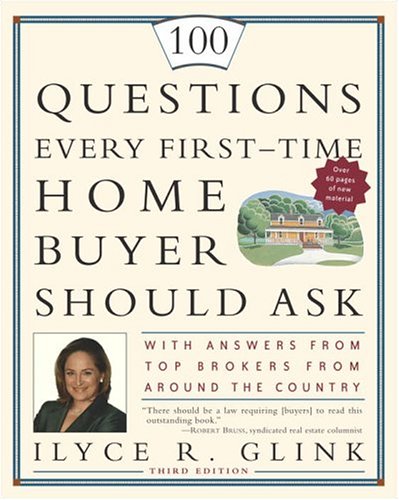
[V225.Ebook] Download Ebook 100 Questions Every First-Time Home Buyer Should Ask: With Answers from Top Brokers from Around the Country, by Ilyce R. Glink

Download Ebook 100 Questions Every First-Time Home Buyer Should Ask: With Answers from Top Brokers from Around the Country, by Ilyce R. Glink

The publications 100 Questions Every First-Time Home Buyer Should Ask: With Answers From Top Brokers From Around The Country, By Ilyce R. Glink, from easy to difficult one will be a really valuable jobs that you can take to alter your life. It will certainly not provide you adverse statement unless you don't get the meaning. This is surely to do in checking out a publication to conquer the significance. Frequently, this publication qualified 100 Questions Every First-Time Home Buyer Should Ask: With Answers From Top Brokers From Around The Country, By Ilyce R. Glink is reviewed since you truly such as this sort of publication. So, you can get much easier to recognize the perception and significance. When even more to consistently keep in mind is by reviewing this book 100 Questions Every First-Time Home Buyer Should Ask: With Answers From Top Brokers From Around The Country, By Ilyce R. Glink, you can satisfy hat your inquisitiveness start by completing this reading publication.

100 Questions Every First-Time Home Buyer Should Ask: With Answers from Top Brokers from Around the Country, by Ilyce R. Glink

100 Questions Every First-Time Home Buyer Should Ask: With Answers from Top Brokers from Around the Country, by Ilyce R. Glink


100 Questions Every First-Time Home Buyer Should Ask: With Answers from Top Brokers from Around the Country, by Ilyce R. Glink

Download Ebook 100 Questions Every First-Time Home Buyer Should Ask: With Answers from Top Brokers from Around the Country, by Ilyce R. Glink

Book 100 Questions Every First-Time Home Buyer Should Ask: With Answers From Top Brokers From Around The Country, By Ilyce R. Glink is among the valuable well worth that will certainly make you always abundant. It will not imply as abundant as the cash give you. When some individuals have absence to face the life, people with numerous books in some cases will certainly be better in doing the life. Why need to be publication 100 Questions Every First-Time Home Buyer Should Ask: With Answers From Top Brokers From Around The Country, By Ilyce R. Glink It is in fact not meant that book 100 Questions Every First-Time Home Buyer Should Ask: With Answers From Top Brokers From Around The Country, By Ilyce R. Glink will provide you power to get to everything. The e-book is to check out and also exactly what we suggested is guide that is reviewed. You could additionally view just how the e-book qualifies 100 Questions Every First-Time Home Buyer Should Ask: With Answers From Top Brokers From Around The Country, By Ilyce R. Glink and also numbers of publication collections are giving right here.

Why must be this e-book 100 Questions Every First-Time Home Buyer Should Ask: With Answers From Top Brokers From Around The Country, By Ilyce R. Glink to read? You will never ever get the understanding and also encounter without managing yourself there or trying by yourself to do it. For this reason, reviewing this e-book 100 Questions Every First-Time Home Buyer Should Ask: With Answers From Top Brokers From Around The Country, By Ilyce R. Glink is required. You could be great and appropriate adequate to obtain exactly how important is reviewing this 100 Questions Every First-Time Home Buyer Should Ask: With Answers From Top Brokers From Around The Country, By Ilyce R. Glink Even you constantly read by responsibility, you can support on your own to have reading publication practice. It will certainly be so useful as well as enjoyable after that.

Yet, how is the way to obtain this publication 100 Questions Every First-Time Home Buyer Should Ask: With Answers From Top Brokers From Around The Country, By Ilyce R. Glink Still perplexed? No matter. You could delight in reviewing this book 100 Questions Every First-Time Home Buyer Should Ask: With Answers From Top Brokers From Around The Country, By Ilyce R. Glink by online or soft documents. Merely download and install the publication 100 Questions Every First-Time Home Buyer Should Ask: With Answers From Top Brokers From Around The Country, By Ilyce R. Glink in the link offered to check out. You will get this 100 Questions Every First-Time Home Buyer Should Ask: With Answers From Top Brokers From Around The Country, By Ilyce R. Glink by online. After downloading and install, you can save the soft data in your computer system or device. So, it will certainly ease you to read this e-book 100 Questions Every First-Time Home Buyer Should Ask: With Answers From Top Brokers From Around The Country, By Ilyce R. Glink in particular time or place. It might be not exactly sure to enjoy reading this e-book 100 Questions Every First-Time Home Buyer Should Ask: With Answers From Top Brokers From Around The Country, By Ilyce R. Glink, because you have great deals of task. However, with this soft file, you can appreciate reviewing in the downtime also in the voids of your works in office.

As soon as a lot more, checking out routine will always offer beneficial perks for you. You may not require to invest several times to check out guide 100 Questions Every First-Time Home Buyer Should Ask: With Answers From Top Brokers From Around The Country, By Ilyce R. Glink Simply alloted several times in our spare or leisure times while having meal or in your workplace to check out. This 100 Questions Every First-Time Home Buyer Should Ask: With Answers From Top Brokers From Around The Country, By Ilyce R. Glink will certainly show you new point that you could do now. It will certainly assist you to improve the quality of your life. Occasion it is merely a fun book 100 Questions Every First-Time Home Buyer Should Ask: With Answers From Top Brokers From Around The Country, By Ilyce R. Glink, you can be happier and also a lot more fun to delight in reading.

100 Questions Every First-Time Home Buyer Should Ask: With Answers from Top Brokers from Around the Country, by Ilyce R. Glink

From the most trusted name in real estate, here is the latest edition of the indispensable guide that helps first-time buyers land the home of their dreams.

Ilyce R. Glink has established herself as America’s most trusted real estate expert. In this new, fully revised and updated edition of the book that made her a household name, Glink offers more than 100 pages of new material addressing all of the current trends home buyers need to stay on top of, including:

• The new construction housing boom and how home buyers can make the most of it

• Mortgage lending innovations, such as interest-only financing and the ability to finance 103 percent of the purchase price

• The changing habits of first-time home buyers (purchasing without a broker, using discount Internet-based services, and buying first homes as investments)

• The latest information on asbestos, mold, radon, and other bio-environmental hazards and new, inexpensive testing methods any home buyer can use

In this third edition of 100 Questions Every First-Time Home Buyer Should Ask, Glink presents new stories of real people who have gone through the home-buying process for the first time and once again offers her trademark friendly advice on how to avoid common home-buyer mistakes.


Also available as an eBook

  • Sales Rank: #116297 in Books
  • Brand: Glink, Ilyce R.
  • Published on: 2005-05-24
  • Released on: 2005-05-24
  • Original language: English
  • Number of items: 1
  • Dimensions: 9.19" h x 1.38" w x 7.33" l, 1.93 pounds
  • Binding: Paperback
  • 512 pages

Amazon.com Review
Buying a home requires skill in a variety of areas. There's negotiating, financing, inspecting a home, and understanding legal contracts. It's really too much for most people to do by themselves, which, as you know by now, is why most of us pay good money to hire real estate agents, mortgage brokers, home inspectors, and other professionals to help with the process. But that doesn't remove the buyer from the role of project manager, whose job is to understand what each specialist is meant to do and recognize when one of those key players is not doing his or her job right. Books such as 100 Questions Every First-Time Home Buyer Should Ask help the novice gain a solid understanding of the basics involved in this often complex process. The questions in this second edition of author Ilyce R. Glink's book also make buyers think about their decisions. If you want to buy an older home, for example, do you understand that older windows may need caulking or new sashes, that bathroom tiles may need regrouting, and that an older home may need rewiring, a new hot water heater, or a new furnace right away? Other questions range from the routine (How much can I afford? How do I make an offer?) to some that are hard to anticipate (What if the seller wants to stay in the house after the closing? Who should attend the closing?). Chapters are devoted to key topics, including figuring out what kind of house you want (this effort starts with a "wish list" and improves with a "reality check"), knowing what you can afford, putting together and negotiating a deal, financing your home, closing on the deal, and then doing what it takes to live happily ever after. Of course, living happily ever after requires understanding when it's time to move on to your next home, a process that may find you dusting off this book in the coming years. --John Russell

Review
Discrimination is still a factor in the marketplace and women home buyers, especially single women, can be susceptible to being taken advantage of by sellers who think they can pull one over on you because you're a woman. Additionally, real estate brokers and lenders are sometimes wary of women purchasing homes by themselves. Your best defense is to know what you're talking about and this book covers virtually everything a first-time home buyer should know: what to look for in a home, how to prequalify for a mortgage, financing, house inspections, closing procedures-all presented in a question and answer format. Owning a home does take a certain amount of responsibility, but it's fun and it's a good investment. The stuff you need to know isn't difficult, and if you know what to expect and what questions to ask, it will remove a lot of anxiety from your first purchase. -- From The WomanSource Catalog & Review: Tools for Connecting the Community for Women; review by FGP

From the Inside Flap
From the most trusted name in real estate: the indispensable guide that helps first-time buyers land the home of their dreams. Now revised and updated for today's marketplace.
, How do I know if my broker is doing a good job? (See question #18.)
, How should I decide how much to offer for a home? (See question #29.)
, How does the negotiation process work? (See question #37.)
, How much of a down payment will I need to buy my home? (See question #61.)
, What are the different types of mortgages available? (See question #75.)
, What if I'm rejected for my loan? (See question #86.)
, What exactly is the closing? And where is it held? (See question #89.)
, Will I need homeowner's insurance? What should it cover? (See question #93.)
What's new in this edition?
Internet resources for home buyers: Where to shop for a loan on the web, how to apply online for a mortgage, and how to contact the agency that regulates real estate brokers and mortgage lenders in your state
Tax laws and what they mean to you: Why the Taxpayer Relief Act is a windfall for homeowners, and how you can take full advantage of it
Buying new construction: How to compare developers and negotiate the best deal
The competitive mortgage market: How to find a reputable lender, how to find a true zero-down loan, and what service premiums tell you about your loan

Most helpful customer reviews

4 of 4 people found the following review helpful.
Love this book -- for anyone who wants to really understand buying a home
By JulesTap
The book is a little outdated (which I knew when ordering) as it was written before the mortgage meltdown circa 2008, however as a mortgage banker and loan officer this book was indispensable when I first started in terms of putting the whole process in context.

3 of 3 people found the following review helpful.
Great Yet Some Financial Advice Is Outdated
By Jake
As a real estate agent, I love it.

My biggest gripe is that a lot of laws have changed. This book was written before 2008, so it still has pre-Dowd Frank legislation.

Other than that, the advice is wonderful. I just wish the author would publish an updated version.

1 of 1 people found the following review helpful.
It turned out much better than expected and this book eased a lot of ...
By Tiffany
I found this more helpful than any other book on this subject. We were looking for a home lower than the 50,000$ range and knew we'd be in for it. It turned out much better than expected and this book eased a lot of my concerns.

See all 94 customer reviews...

100 Questions Every First-Time Home Buyer Should Ask: With Answers from Top Brokers from Around the Country, by Ilyce R. Glink PDF
100 Questions Every First-Time Home Buyer Should Ask: With Answers from Top Brokers from Around the Country, by Ilyce R. Glink EPub
100 Questions Every First-Time Home Buyer Should Ask: With Answers from Top Brokers from Around the Country, by Ilyce R. Glink Doc
100 Questions Every First-Time Home Buyer Should Ask: With Answers from Top Brokers from Around the Country, by Ilyce R. Glink iBooks
100 Questions Every First-Time Home Buyer Should Ask: With Answers from Top Brokers from Around the Country, by Ilyce R. Glink rtf
100 Questions Every First-Time Home Buyer Should Ask: With Answers from Top Brokers from Around the Country, by Ilyce R. Glink Mobipocket
100 Questions Every First-Time Home Buyer Should Ask: With Answers from Top Brokers from Around the Country, by Ilyce R. Glink Kindle

100 Questions Every First-Time Home Buyer Should Ask: With Answers from Top Brokers from Around the Country, by Ilyce R. Glink PDF

100 Questions Every First-Time Home Buyer Should Ask: With Answers from Top Brokers from Around the Country, by Ilyce R. Glink PDF

100 Questions Every First-Time Home Buyer Should Ask: With Answers from Top Brokers from Around the Country, by Ilyce R. Glink PDF

Minggu, 19 Juni 2011

[C833.Ebook] PDF Download Piercing the Darkness, by Frank E. Peretti

PDF Download Piercing the Darkness, by Frank E. Peretti

By clicking the link that our company offer, you could take guide Piercing The Darkness, By Frank E. Peretti completely. Attach to internet, download, and save to your tool. Exactly what else to ask? Reading can be so simple when you have the soft documents of this Piercing The Darkness, By Frank E. Peretti in your gizmo. You can additionally replicate the documents Piercing The Darkness, By Frank E. Peretti to your workplace computer or in the house or even in your laptop computer. Simply share this great information to others. Recommend them to visit this web page as well as get their hunted for publications Piercing The Darkness, By Frank E. Peretti.

Piercing the Darkness, by Frank E. Peretti

Piercing the Darkness, by Frank E. Peretti


Piercing the Darkness, by Frank E. Peretti

PDF Download Piercing the Darkness, by Frank E. Peretti

Piercing The Darkness, By Frank E. Peretti As a matter of fact, book is really a home window to the world. Even many individuals might not appreciate reviewing publications; guides will still give the exact details concerning reality, fiction, experience, journey, politic, religion, as well as much more. We are below a website that offers compilations of books greater than guide store. Why? We offer you lots of varieties of link to get the book Piercing The Darkness, By Frank E. Peretti On is as you need this Piercing The Darkness, By Frank E. Peretti You could locate this book conveniently here.

Do you ever before understand guide Piercing The Darkness, By Frank E. Peretti Yeah, this is an extremely fascinating publication to check out. As we informed recently, reading is not type of obligation activity to do when we need to obligate. Reviewing must be a habit, an excellent routine. By reading Piercing The Darkness, By Frank E. Peretti, you could open up the new globe and obtain the power from the world. Everything could be acquired with guide Piercing The Darkness, By Frank E. Peretti Well briefly, e-book is really effective. As what we provide you right here, this Piercing The Darkness, By Frank E. Peretti is as one of reviewing e-book for you.

By reviewing this e-book Piercing The Darkness, By Frank E. Peretti, you will obtain the ideal thing to acquire. The brand-new thing that you don't should spend over money to get to is by doing it on your own. So, exactly what should you do now? Go to the web link page and also download the publication Piercing The Darkness, By Frank E. Peretti You could get this Piercing The Darkness, By Frank E. Peretti by on-line. It's so very easy, isn't really it? Nowadays, technology really assists you tasks, this on-line publication Piercing The Darkness, By Frank E. Peretti, is as well.

Be the initial to download this publication Piercing The Darkness, By Frank E. Peretti and let checked out by coating. It is quite simple to review this publication Piercing The Darkness, By Frank E. Peretti since you don't should bring this published Piercing The Darkness, By Frank E. Peretti everywhere. Your soft documents e-book can be in our device or computer so you can delight in checking out everywhere and each time if required. This is why lots numbers of people additionally review the publications Piercing The Darkness, By Frank E. Peretti in soft fie by downloading and install the e-book. So, be just one of them which take all benefits of reading the e-book Piercing The Darkness, By Frank E. Peretti by online or on your soft file system.

Piercing the Darkness, by Frank E. Peretti

Leaders in the realm of darkness have mounted a new attack that will create chaos and cause defeat in the human beings who claim unity with their enemy, Christ.

Readers will find themselves rooting for a most unlikely hero as her quest for inner peace exposes the most frightening war of all, the battle for the human soul. Be captivated anew as you enter the world of battling angels and demons that author Frank Peretti so masterfully uncovered in This Present Darkness.

  • Sales Rank: #29789 in Books
  • Brand: Tyndale Momentum
  • Published on: 2002-08
  • Original language: English
  • Number of items: 1
  • Dimensions: 6.94" h x 1.44" w x 4.13" l, .65 pounds
  • Binding: Mass Market Paperback
  • 576 pages
Features
  • Great product!

Review
Frank Peretti kicked open the doors that all of us Christian novelists are passing through today. We owe him a huge debt. Jerry B. Jenkins, author, The Left Behind series. --Jerry B. Jenkins, The Left Behind Series

Review

"Frank Peretti kicked open the doors that all of us Christian novelists are passing through today. We owe him a huge debt."
—Jerry B. Jenkins, author, The Left Behind series

About the Author
Frank E. Peretti es el destacado autor de Esta patente oscuridad, publicado por Editorial Vida. El y su esposa Barbara residen en la costa pacifica del noroeste de los Estados Unidos.

Most helpful customer reviews

22 of 22 people found the following review helpful.
Reading for the third time!
By Amazon Customer
Frank Peretti 's books are all good, but my favorites are 'This Present Darkness' and 'Piercing the Darkness.' This book is well written, and a real page-turner. It gives shape and form to the spiritual warfare that we face daily. Gives you a glimpse behind the physical world to reveal who the real enemy is. I highly recommend it for those interested in spiritual issues And to those looking for a really good mystery and interesting story.

0 of 0 people found the following review helpful.
Great book
By T. Poe
I read this book when it was first published. I have never forgotten how good it was and what a page turner it was. I am rebuilding my library of books and am thrilled to find hardback copies available.

0 of 0 people found the following review helpful.
Piercing the Darkness, still as good now as when it was originally published
By Gregg Eaton
Very good read. This was my 2nd time reading it. The first was when the book originally was published. It's still as good now, as it was then, but even more relevant now.

See all 462 customer reviews...

Piercing the Darkness, by Frank E. Peretti PDF
Piercing the Darkness, by Frank E. Peretti EPub
Piercing the Darkness, by Frank E. Peretti Doc
Piercing the Darkness, by Frank E. Peretti iBooks
Piercing the Darkness, by Frank E. Peretti rtf
Piercing the Darkness, by Frank E. Peretti Mobipocket
Piercing the Darkness, by Frank E. Peretti Kindle

Piercing the Darkness, by Frank E. Peretti PDF

Piercing the Darkness, by Frank E. Peretti PDF

Piercing the Darkness, by Frank E. Peretti PDF

Senin, 13 Juni 2011

[H208.Ebook] Get Free Ebook Angel... Empieza el juego (Spanish Edition), by Brianne Miller

Get Free Ebook Angel... Empieza el juego (Spanish Edition), by Brianne Miller

Just what should you believe much more? Time to get this Angel... Empieza El Juego (Spanish Edition), By Brianne Miller It is easy after that. You could only sit and also remain in your area to obtain this publication Angel... Empieza El Juego (Spanish Edition), By Brianne Miller Why? It is on-line publication shop that give a lot of collections of the referred books. So, merely with net link, you can appreciate downloading this book Angel... Empieza El Juego (Spanish Edition), By Brianne Miller and also numbers of publications that are hunted for currently. By checking out the web link page download that we have given, guide Angel... Empieza El Juego (Spanish Edition), By Brianne Miller that you refer so much can be located. Simply conserve the asked for book downloaded and after that you can take pleasure in guide to read every single time as well as location you desire.

Angel... Empieza el juego (Spanish Edition), by Brianne Miller

Angel... Empieza el juego (Spanish Edition), by Brianne Miller


Angel... Empieza el juego (Spanish Edition), by Brianne Miller

Get Free Ebook Angel... Empieza el juego (Spanish Edition), by Brianne Miller

Exactly how an idea can be got? By looking at the celebrities? By going to the sea as well as taking a look at the sea weaves? Or by reviewing a book Angel... Empieza El Juego (Spanish Edition), By Brianne Miller Everybody will certainly have particular particular to gain the inspiration. For you which are passing away of publications and also constantly obtain the inspirations from books, it is really great to be right here. We will show you hundreds collections of the book Angel... Empieza El Juego (Spanish Edition), By Brianne Miller to check out. If you such as this Angel... Empieza El Juego (Spanish Edition), By Brianne Miller, you can also take it as your own.

Why must be publication Angel... Empieza El Juego (Spanish Edition), By Brianne Miller Book is one of the easy resources to search for. By getting the writer as well as style to obtain, you can locate a lot of titles that provide their information to get. As this Angel... Empieza El Juego (Spanish Edition), By Brianne Miller, the inspiring publication Angel... Empieza El Juego (Spanish Edition), By Brianne Miller will certainly offer you what you need to cover the task target date. And also why should be in this site? We will certainly ask first, have you a lot more times to go with going shopping guides and also hunt for the referred book Angel... Empieza El Juego (Spanish Edition), By Brianne Miller in book store? Lots of people may not have adequate time to locate it.

For this reason, this site offers for you to cover your issue. We show you some referred publications Angel... Empieza El Juego (Spanish Edition), By Brianne Miller in all types and motifs. From typical writer to the well-known one, they are all covered to give in this website. This Angel... Empieza El Juego (Spanish Edition), By Brianne Miller is you're looked for publication; you just need to go to the web link page to receive this internet site then choose downloading. It will not take sometimes to get one publication Angel... Empieza El Juego (Spanish Edition), By Brianne Miller It will certainly depend on your internet connection. Just purchase and download the soft documents of this book Angel... Empieza El Juego (Spanish Edition), By Brianne Miller

It is so easy, isn't it? Why don't you try it? In this site, you could likewise locate various other titles of the Angel... Empieza El Juego (Spanish Edition), By Brianne Miller book collections that could be able to assist you locating the very best remedy of your work. Reading this publication Angel... Empieza El Juego (Spanish Edition), By Brianne Miller in soft documents will certainly likewise ease you to obtain the resource easily. You could not bring for those books to someplace you go. Only with the gadget that always be with your all over, you can read this publication Angel... Empieza El Juego (Spanish Edition), By Brianne Miller So, it will certainly be so swiftly to complete reading this Angel... Empieza El Juego (Spanish Edition), By Brianne Miller

Angel... Empieza el juego (Spanish Edition), by Brianne Miller

Sarah odia el d�a de San Valent�n. Est� cansada de los hombres y lo �nico que quiere es meterse bajo las s�banas de su cama y no salir hasta que el odioso d�a termine. Pero este a�o el catorce de febrero traer� una gran sorpresa para ella. Blake es un hombre sexy, atractivo y seguro de s� mismo que se cruza en su camino por casualidad. La provoca, la reta, y ella no sabe c�mo escapar de la situaci�n. �ngel... empieza el juego. �Sabr�s el significado de las flores?

  • Published on: 2015-09-29
  • Original language: Spanish
  • Dimensions: 9.00" h x .39" w x 6.00" l, .52 pounds
  • Binding: Paperback
  • 172 pages

Most helpful customer reviews

0 of 0 people found the following review helpful.
Una historia que no te puedes perder!!
By Paula Guzman
Primero quiero decir que la autora tiene la capacidad de sorprender a sus lectores, tiene una manera de llevar las historias que nos mantiene enganchados de principio a fin. Y en esta novela tambi�n me sucedi� eso. La historia esta narrada de una forma tan natural y tan fresca que empatiza de inmediato con el lector. Sarah es una protagonista que se deja ver tal cual como es, con sus miedos, anhelos y emociones . No le gusta el dia de los enamorados pero justo un dia como esos su vida da un giro y entonces tendr� que empezar a jugar a descubrir el significado de las flores.
Blake es el hombre hermoso que todas quisi�ramos encontrar alguna vez por el camino, pero no todo es perfecto, tendr�s que jugar el juego tu tambi�n para descubrir lo que les espera.
A pesar de ser una novela rom�ntica tiene momentos reales y cotidianos y en ning�n momento derrama miel. La intensidad de sentimientos de los protagonistas logran traspasar las p�ginas para contagiarte de mucho amor, pasi�n desmedida , inseguridades , miedos y anhelos.
Definitivamente recomiendo mucho esta novela, el �nico problema es qued� tan enganchada, que al leer la palabra fin me quede con ganas de m�s Sarah y m�s Blake.

0 of 0 people found the following review helpful.
Ha nacido una estrella
By Anna Pol
Ante todo, quiero agradecerle a Brianne Miller que me facilitara una copia del libro para que lo leyera a cambio de que diera mi honesta opini�n sobre el mismo.
Brianne ha madurado much�simo respecto a sus primeras obras. Sus personajes han ganado espesor y profundidad, la trama ha ganado en complejidad y su lenguaje se ha hecho m�s cuidado.
No voy a revelar nada en absoluto de la trama de esta novela, porque hay que leerla, sino que me voy a centrar en algo que me interesa mucho: la evoluci�n de su autora. Brianne ya ha dejado atr�s – y ojo, en muy, pero que muy pocos meses – a la escritora novel de la dulce historia de amor de "La cara oculta del destino" y de la inusitada e ingenua novela de vampiros – tengo que confesar mi debilidad por los vampiros – de "El eco de la esperanza". En "�ngel... empieza el juego" nos encontramos con una Brianne m�s dura y curtida en las lides del escribir, pero no por ello menos rom�ntica. Esta mujer avanza con pie firme y seguro... y acelerado. No os perd�is esta novela por nada del mundo, ni las que a buen seguro le van a seguir, porque hay Brianne para rato y va a dar mucho que hablar.

0 of 0 people found the following review helpful.
entretiene pero nada mas
By Amazon Customer
No me gust� mucho. Esta buena para matar el tiempo.

See all 4 customer reviews...

Angel... Empieza el juego (Spanish Edition), by Brianne Miller PDF
Angel... Empieza el juego (Spanish Edition), by Brianne Miller EPub
Angel... Empieza el juego (Spanish Edition), by Brianne Miller Doc
Angel... Empieza el juego (Spanish Edition), by Brianne Miller iBooks
Angel... Empieza el juego (Spanish Edition), by Brianne Miller rtf
Angel... Empieza el juego (Spanish Edition), by Brianne Miller Mobipocket
Angel... Empieza el juego (Spanish Edition), by Brianne Miller Kindle

Angel... Empieza el juego (Spanish Edition), by Brianne Miller PDF

Angel... Empieza el juego (Spanish Edition), by Brianne Miller PDF

Angel... Empieza el juego (Spanish Edition), by Brianne Miller PDF

Minggu, 05 Juni 2011

[B338.Ebook] Download PDF Arrival (Stories of Your Life MTI), by Ted Chiang

Download PDF Arrival (Stories of Your Life MTI), by Ted Chiang

The soft data indicates that you should go to the link for downloading and after that save Arrival (Stories Of Your Life MTI), By Ted Chiang You have possessed guide to check out, you have actually posed this Arrival (Stories Of Your Life MTI), By Ted Chiang It is simple as visiting the book establishments, is it? After getting this short explanation, ideally you can download and install one and also begin to review Arrival (Stories Of Your Life MTI), By Ted Chiang This book is very easy to check out every single time you have the free time.

Arrival (Stories of Your Life MTI), by Ted Chiang

Arrival (Stories of Your Life MTI), by Ted Chiang


Arrival (Stories of Your Life MTI), by Ted Chiang

Download PDF Arrival (Stories of Your Life MTI), by Ted Chiang

Arrival (Stories Of Your Life MTI), By Ted Chiang. Give us 5 minutes as well as we will show you the most effective book to review today. This is it, the Arrival (Stories Of Your Life MTI), By Ted Chiang that will certainly be your ideal selection for much better reading book. Your 5 times will certainly not spend squandered by reading this internet site. You can take the book as a resource to make much better idea. Referring the books Arrival (Stories Of Your Life MTI), By Ted Chiang that can be located with your demands is sometime hard. However here, this is so simple. You could discover the very best point of book Arrival (Stories Of Your Life MTI), By Ted Chiang that you could check out.

Yet below, we will show you extraordinary thing to be able always review guide Arrival (Stories Of Your Life MTI), By Ted Chiang wherever and also whenever you happen and time. The publication Arrival (Stories Of Your Life MTI), By Ted Chiang by just could assist you to understand having guide to check out whenever. It will not obligate you to consistently bring the thick e-book any place you go. You can just keep them on the gadget or on soft file in your computer to consistently check out the enclosure during that time.

Yeah, investing time to check out the book Arrival (Stories Of Your Life MTI), By Ted Chiang by on-line could likewise provide you good session. It will certainly ease to communicate in whatever problem. By doing this can be more fascinating to do as well as less complicated to check out. Now, to obtain this Arrival (Stories Of Your Life MTI), By Ted Chiang, you could download and install in the web link that we supply. It will aid you to get very easy way to download and install the publication Arrival (Stories Of Your Life MTI), By Ted Chiang.

The publications Arrival (Stories Of Your Life MTI), By Ted Chiang, from easy to complicated one will certainly be a very helpful jobs that you could take to change your life. It will certainly not offer you unfavorable statement unless you do not obtain the definition. This is definitely to do in checking out a book to get rid of the definition. Commonly, this publication entitled Arrival (Stories Of Your Life MTI), By Ted Chiang is reviewed considering that you actually similar to this sort of book. So, you can obtain easier to understand the impression as well as significance. As soon as longer to consistently keep in mind is by reviewing this publication Arrival (Stories Of Your Life MTI), By Ted Chiang, you can satisfy hat your inquisitiveness start by finishing this reading publication.

Arrival (Stories of Your Life MTI), by Ted Chiang

Previously published as Stories of Your Life and Others. Includes "Story Of Your Life," the basis for the major motion picture Arrival, starring Amy Adams, Forest Whitaker, Jeremy Renner, and directed by Denis Villeneuve.

"Shining, haunting, mind-blowing tales . . . Ted Chiang is so exhilarating, so original, so stylish he just leaves you speechless." —Junot D�az�

Ted Chiang has long been known as one of the most powerful science fiction writers working today.�Offering readers the dual delights of the very strange and the heartbreakingly familiar,�Arrival�presents characters who must confront sudden change. In "Story of Your Life," which provides the basis for the film�Arrival,�alien lifeforms suddenly appear on Earth. When a linguist is brought in to help communicate with them and discern their intentions, her new knowledge of their language and its nonlinear structure allows her to see future events and all the joy and pain they may bring. In each story of this incredible collection, with sharp intelligence and humor, Ted Chiang examines what it means to be alive in a world marked by uncertainty, but also by wonder.

  • Sales Rank: #1705 in Books
  • Published on: 2016-11-01
  • Released on: 2016-11-01
  • Original language: English
  • Dimensions: 8.00" h x .90" w x 5.10" l, .0 pounds
  • Binding: Paperback
  • 304 pages

Review
“Shining, haunting, mind-blowing tales . . . this collection is a pure marvel. Chiang is so exhilarating so original so stylish he just leaves you speechless. I always suggest a person read at least 52 books a year for proper mental functioning but if you only have time for one, be at peace: you found it.” —Junot D�az, author of�The Brief Wondrous Life of Oscar Wao

“Meticulously pieced together, utterly thought through, Chiang’s stories emerge slowly . . . but with the perfection of slow-growing crystal.” —Lev Grossman, Best of the Decade: Science Fiction and Fantasy, Techland.com

"Ted Chiang is one of the best and smartest writers working today. If you don't know his name, let's fix that. Now."�—Karen Joy Fowler, author of�We Are All Completely Beside Ourselves

"Ted Chiang astonishes. You must read him."�—Kelly Link, author of�Get in Trouble

“United by a humane intelligence that speaks very directly to the reader, and makes us experience each story with immediacy and Chiang’s calm passion.” —China Mieville,�The Guardian

“Ted is a national treasure . . . each of those stories is a goddamned jewel.” —Cory Doctorow, BoingBoing

“Confirms that blending science and fine art at this length can produce touching works, tales as intimate as our own blood cells, with the structural strength of just-discovered industrial alloys.” —Seattle Times

“Chiang derides lazy thinking, weasels it out of its hiding place, and leaves it cowering.” —Washington Post

“Essential. You won’t know SF if you don’t read Ted Chiang.” —Greg Bear

“Chiang writes seldom, but his almost unfathomably wonderful stories tick away with the precision of a Swiss watch—and explode in your awareness with shocking, devastating force.” —Kirkus Reviews�(Starred Review)

“The first must-read SF book of the year.” —Publishers Weekly�(Starred Review)

“He puts the science back in science fiction—brilliantly.” —Booklist�(Starred Review)

About the Author
Ted Chiang was born in Port Jefferson, New York, and holds a degree in computer science. In 1989 he attended the Clarion Science Fiction and Fantasy Writer’s Workshop. His fiction has won four Hugo, four Nebula, and four Locus awards, and he is the recipient of the John W. Campbell Award for Best New Writer and the Theodore Sturgeon Memorial Award.�Stories of Your Life and Others�has been translated into ten languages. He lives near Seattle, Washington.

Excerpt. � Reprinted by permission. All rights reserved.
STORY OF YOUR LIFE


Your father is about to ask me the question. This is the most important moment in our lives, and I want to pay attention, note every detail. Your dad and I have just come back from an evening out, dinner and a show; it’s after midnight. We came out onto the patio to look at the full moon; then I told your dad I wanted to dance, so he humors me and now we’re slow-dancing, a pair of thirtysomethings swaying back and forth in the moonlight like kids. I don’t feel the night chill at all. And then your dad says, “Do you want to make a baby?”

Right now your dad and I have been married for about two years, living on Ellis Avenue; when we move out you’ll still be too young to remember the house, but we’ll show you pictures of it, tell you stories about it. I’d love to tell you the story of this evening, the night you’re conceived, but the right time to do that would be when you’re ready to have children of your own, and we’ll never get that chance.�

Telling it to you any earlier wouldn’t do any good; for most of your life you won’t sit still to hear such a romantic -- you’d say sappy -- story. I remember the scenario of your origin you’ll suggest when you’re twelve.�

“The only reason you had me was so you could get a maid you wouldn’t have to pay,” you’ll say bitterly, dragging the vacuum cleaner out of the closet.

“That’s right,” I’ll say. “Thirteen years ago I knew the carpets would need vacuuming around now, and having a baby seemed to be the cheapest and easiest way to get the job done. Now kindly get on with it.”

“If you weren’t my mother, this would be illegal,” you’ll say, seething as you unwind the power cord and plug it into the wall outlet.�

That will be in the house on Belmont Street. I’ll live to see strangers occupy both houses: the one you’re conceived in and the one you grow up in. Your dad and I will sell the first a couple years after your arrival. I’ll sell the second shortly after your departure. By then Nelson and I will have moved into our farmhouse, and your dad will be living with what’s-her-name.�

I know how this story ends; I think about it a lot. I also think a lot about how it began, just a few years ago, when ships appeared in orbit and artifacts appeared in meadows. The government said next to nothing about them, while the tabloids said every possible thing.�

And then I got a phone call, a request for a meeting.�

* * *

I spotted them waiting in the hallway, outside my office. They made an odd couple; one wore a military uniform and a crewcut, and carried an aluminum briefcase. He seemed to be assessing his surroundings with a critical eye. The other one was easily identifiable as an academic: full beard and mustache, wearing corduroy. He was browsing through the overlapping sheets stapled to a bulletin board nearby.�

“Colonel Weber, I presume?” I shook hands with the soldier. “Louise Banks.”

“Dr. Banks. Thank you for taking the time to speak with us,” he said.�

“Not at all; any excuse to avoid the faculty meeting.”

Colonel Weber indicated his companion. “This is Dr. Gary Donnelly, the physicist I mentioned when we spoke on the phone.”

“Call me Gary,” he said as we shook hands. “I’m anxious to hear what you have to say.”
We entered my office. I moved a couple of stacks of books off the second guest chair, and we all sat down. “You said you wanted me to listen to a recording. I presume this has something to do with the aliens?”

“All I can offer is the recording,” said Colonel Weber.

“Okay, let’s hear it.”

Colonel Weber took a tape machine out of his briefcase and pressed play. The recording sounded vaguely like that of a wet dog shaking the water out of its fur.�

“What do you make of that?” he asked.�

I withheld my comparison to a wet dog. “What was the context in which this recording was made?”

“I’m not at liberty to say.”

“It would help me interpret those sounds. Could you see the alien while it was speaking? Was it doing anything at the time?”�

“The recording is all I can offer.”

“You won’t be giving anything away if you tell me that you’ve seen the aliens; the public’s assumed you have.”�

Colonel Weber wasn’t budging. “Do you have any opinion about its linguistic properties?” he asked.

“Well, it’s clear that their vocal tract is substantially different from a human vocal tract. I assume that these aliens don’t look like humans?”

The colonel was about to say something noncommittal when Gary Donelly asked, “Can you make any guesses based on the tape?”�

“Not really. It doesn’t sound like they’re using a larynx to make those sounds, but that doesn’t tell me what they look like.”

“Anything--is there anything else you can tell us?” asked Colonel Weber.�

I could see he wasn’t accustomed to consulting a civilian. “Only that establishing communications is going to be really difficult because of the difference in anatomy. They’re almost certainly using sounds that the human vocal tract can’t reproduce, and maybe sounds that the human ear can’t distinguish.”

“You mean infra- or ultrasonic frequencies?” asked Gary Donelly.

“Not specifically. I just mean that the human auditory system isn’t an absolute acoustic instrument; it’s optimized to recognize the sounds that a human larynx makes. With an alien vocal system, all bets are off.” I shrugged. “Maybe�we’ll be able to hear the difference between alien phonemes, given enough practice, but it’s possible our ears simply can’t recognize the distinctions they consider meaningful. In that case we’d need a sound spectrograph to know what an alien is saying.”

Colonel Weber asked, “Suppose I gave you an hour’s worth of recordings; how long would it take you to determine if we need this sound spectrograph or not?”

“I couldn’t determine that with just a recording no matter how much time I had. I’d need to talk with the aliens directly.”

The colonel shook his head. “Not possible.”

I tried to break it to him gently. “That’s your call, of course. But the only way to learn an unknown language is to interact with a native speaker, and by that I mean asking questions, holding a conversation, that sort of thing. Without that, it’s simply not possible. So if you want to learn the aliens’ language, someone with training in field linguistics -- whether it’s me or someone else -- will have to talk with an alien. Recordings alone aren’t sufficient.”
Colonel Weber frowned. “You seem to be implying that no alien could have learned human languages by monitoring our broadcasts.”

“I doubt it. They’d need instructional material specifically designed to teach human languages to nonhumans. Either that, or interaction with a human. If they had either of those, they could learn a lot from TV, but otherwise, they wouldn’t have a starting point.”
The colonel clearly found this interesting; evidently his philosophy was, the less the aliens knew, the better. Gary Donnelly read the colonel’s expression too and rolled his eyes. I suppressed a smile.�

Then Colonel Weber asked, “Suppose you were learning a new language by talking to its speakers; could you do it without teaching them English?”

“That would depend on how cooperative the native speakers were. They’d almost certainly pick up bits and pieces while I’m learning their language, but it wouldn’t have to be much if they’re willing to teach. On the other hand, if they’d rather learn English than teach us their language, that would make things far more difficult.”�

The colonel nodded. “I’ll get back to you on this matter.”

* * *

The request for that meeting was perhaps the second most momentous phone call in my life. The first, of course, will be the one from Mountain Rescue. At that point your dad and I will be speaking to each other maybe once a year, tops. After I get that phone call, though, the first thing I’ll do will be to call your father.�

He and I will drive out together to perform the identification, a long silent car ride. I remember the morgue, all tile and stainless steel, the hum of refrigeration and smell of antiseptic. An orderly will pull the sheet back to reveal your face. Your face will look wrong somehow, but I’ll know it’s you.�

“Yes, that’s her,” I’ll say. “She’s mine.”

You’ll be twenty-five then.

* * *
�����������
The MP checked my badge, made a notation on his clipboard, and opened the gate; I drove the off-road vehicle into the encampment, a small village of tents pitched by the Army in a farmer’s sun-scorched pasture. At the center of the encampment was one of the alien devices, nicknamed “looking glasses.”

According to the briefings I’d attended, there were nine of these in the United States, one hundred and twelve in the world. The looking glasses acted as two-way communication devices, presumably with the ships in orbit. No one knew why the aliens wouldn’t talk to us in person; fear of cooties, maybe. A team of scientists, including a physicist and a linguist, was assigned to each looking glass; Gary Donnelly and I were on this one.�

Gary was waiting for me in the parking area. We navigated a circular maze of concrete barricades until we reached the large tent that covered the looking glass itself. In front of the tent was an equipment cart loaded with goodies borrowed from the school’s phonology lab; I had sent it ahead for inspection by the Army.�

Also outside the tent were three tripod-mounted video cameras whose lenses peered, through windows in the fabric wall, into the main room. Everything Gary and I did would be reviewed by countless others, including military intelligence. In addition we would each send daily reports, of which mine had to include estimates on how much English I thought the aliens could understand.
Gary held open the tent flap and gestured for me to enter. “Step right up,” he said, circus barker-style. “Marvel at creatures the likes of which have never been seen on God’s green earth.”
“And all for one slim dime,” I murmured, walking through the door. At the moment the looking glass was inactive, resembling a semicircular mirror over ten feet high and twenty feet across. On the brown grass in front of the looking glass, an arc of white spray paint outlined the activation area. Currently the area contained only a table, two folding chairs, and a power strip with a cord leading to a generator outside. The buzz of fluorescent lamps, hung from poles along the edge of the room, commingled with the buzz of flies in the sweltering heat.�

Gary and I looked at each other, and then began pushing the cart of equipment up to the table. As we crossed the paint line, the looking glass appeared to grow transparent; it was as if someone was slowly raising the illumination behind tinted glass. The illusion of depth was uncanny; I felt I could walk right into it. Once the looking glass was fully lit it resembled a life-size diorama of a semicircular room. The room contained a few large objects that might have been furniture, but no aliens. There was a door in the curved rear wall.�

We busied ourselves connecting everything together: microphone, sound spectrograph, portable computer, and speaker. As we worked, I frequently glanced at the looking glass, anticipating the aliens’ arrival. Even so I jumped when one of them entered.

It looked like a barrel suspended at the intersection of seven limbs. It was radially symmetric, and any of its limbs could serve as an arm or a leg. The one in front of me was walking around on four legs, three non-adjacent arms curled up at its sides. Gary called them “heptapods.”
I’d been shown videotapes, but I still gawked. Its limbs had no distinct joints; anatomists guessed they might be supported by vertebral columns. Whatever their underlying structure, the heptapod’s limbs conspired to move it in a disconcertingly fluid manner. Its “torso” rode atop the rippling limbs as smoothly as a hovercraft.�

Seven lidless eyes ringed the top of the heptapod’s body. It walked back to the doorway from which it entered, made a brief sputtering sound, and returned to the center of the room followed by another heptapod; at no point did it ever turn around. Eerie, but logical; with eyes on all sides, any direction might as well be “forward.”�

Gary had been watching my reaction. “Ready?” he asked.�

I took a deep breath. “Ready enough.” I’d done plenty of fieldwork before, in the Amazon, but it had always been a bilingual procedure: either my informants knew some Portuguese, which I could use, or I’d previously gotten an intro to their language from the local missionaries. This would be my first attempt at conducting a true monolingual discovery procedure. It was straightforward enough in theory, though.�

I walked up to the looking glass and a heptapod on the other side did the same. The image was so real that my skin crawled. I could see the texture of its gray skin, like corduroy ridges arranged in whorls and loops. There was no smell at all from the looking glass, which somehow made the situation stranger.�

I pointed to myself and said slowly, “Human.” Then I pointed to Gary. “Human.” Then I pointed at each heptapod and said, “What are you?”�

One of the heptapods pointed to itself with one limb, the four terminal digits pressed together. That was lucky. In some cultures a person pointed with his chin; if the heptapod hadn’t used one of its limbs, I wouldn’t have known what gesture to look for. I heard a brief fluttering sound, and saw a puckered orifice at the top of its body vibrate; it was talking. Then it pointed to its companion and fluttered again.

I went back to my computer; on its screen were two virtually identical spectrographs representing the fluttering sounds. I marked a sample for playback. I pointed to myself and said “Human” again, and did the same with Gary. Then I pointed to the heptapod, and played back the flutter on the speaker.�

The heptapod fluttered some more. The second half of the spectrograph for this utterance looked like a repetition: call the previous utterances [flutter1], then this one was [flutter2flutter1].�
I pointed at something that might have been a heptapod chair. “What is that?”

The heptapod paused, and then pointed at the “chair” and talked some more. The spectrograph for this differed distinctly from that of the earlier sounds: [flutter3]. Once again, I pointed to the “chair” while playing back [flutter3].

The heptapod replied; judging by the spectrograph, it looked like [flutter3flutter2]. Optimistic interpretation: the heptapod was confirming my utterances as correct, which implied compatibility between heptapod and human patterns of discourse. Pessimistic interpretation: it had a nagging cough.�

At my computer I delimited certain sections of the spectrograph and typed in a tentative gloss for each: “heptapod” for [flutter1], “yes” for [flutter2], and “chair” for [flutter3]. Then I typed “Language: Heptapod A” as a heading for all the utterances.�

Gary watched what I was typing. “What’s the ‘A’ for?”

“It just distinguishes this language from any other ones the heptapods might use,” I said. He nodded.

“Now let’s try something, just for laughs.” I pointed at each heptapod and tried to mimic the sound of [flutter1], “heptapod.” After a long pause, the first heptapod said something and then the second one said something else, neither of whose spectrographs resembled anything said before. I couldn’t tell if they were speaking to each other or to me since they had no faces to turn. I tried pronouncing [flutter1] again, but there was no reaction.�

“Not even close,” I grumbled.

“I’m impressed you can make sounds like that at all,” said Gary.

“You should hear my moose call. Sends them running.”�

I tried again a few more times, but neither heptapod responded with anything I could recognize. Only when I replayed the recording of the heptapod’s pronunciation did I get a confirmation; the heptapod replied with [flutter2], “yes.”�

“So we’re stuck with using recordings?” asked Gary.

I nodded. “At least temporarily.”

“So now what?”

“Now we make sure it hasn’t actually been saying ‘aren’t they cute’ or ‘look what they’re doing now.’ Then we see if we can identify any of these words when that other heptapod pronounces them.” I gestured for him to have a seat. “Get comfortable; this’ll take a while.”

Most helpful customer reviews

16 of 16 people found the following review helpful.
Thoughtful Reading
By Dave Carver
I bought this book after the story came to my attention from all of the coming attractions on TV now for this movie. I'm glad as the book offers so much more than just the single story. All of The stories are quite thought-provoking.

From the biblical to somewhat steam punk-ish to the ultimate social justice warrior situation, each story captures the imagination. I am only hopeful that the movie Arrival can live up to the story. Enjoy!

28 of 29 people found the following review helpful.
Remembering the future
By J. Chambers
Note: This collection of eight short stories by sci-fi author Ted Chiang was originally published as Stories of Your Life. One of the short stories, "Story Of Your Life," is the basis for the motion picture "Arrival," which will be released in the United States on November 11, 2016. I've seen the trailer and read a plot summary of the movie, and it appears that the filmmakers have taken some liberties with the story. In any case, I'm looking forward to seeing the film.

Here is my earlier review of Stories of Your Life:
If you've never read any of Ted Chiang's stories, you've missed some of the world's best contemporary science fiction. Stories of Your Life is a remarkable collection of eight stories that were separately published, with several of them winning major awards. The title story, "Story of Your Life," is one of the most original, thought-provoking stories that I've ever read. It's not a casual read, with its mathematical and physics references, but the totally unexpected but logical ending is well worth staying with it. It's definitely my favorite story, but all eight stories are outstanding.

0 of 0 people found the following review helpful.
what I liked was that language written is linear and the other ...
By Amazon Customer
The rabbit is ready to eat....what I liked was that language written is linear and the other beings communicate past and present as a whole. While the interactions with her daughter seemed to already have happened. They would happen.

See all 13 customer reviews...

Arrival (Stories of Your Life MTI), by Ted Chiang PDF
Arrival (Stories of Your Life MTI), by Ted Chiang EPub
Arrival (Stories of Your Life MTI), by Ted Chiang Doc
Arrival (Stories of Your Life MTI), by Ted Chiang iBooks
Arrival (Stories of Your Life MTI), by Ted Chiang rtf
Arrival (Stories of Your Life MTI), by Ted Chiang Mobipocket
Arrival (Stories of Your Life MTI), by Ted Chiang Kindle

Arrival (Stories of Your Life MTI), by Ted Chiang PDF

Arrival (Stories of Your Life MTI), by Ted Chiang PDF

Arrival (Stories of Your Life MTI), by Ted Chiang PDF

Sabtu, 04 Juni 2011

[P745.Ebook] Ebook Download Man-Made UFOs, 1944-1994: Fifty Years of Suppression, by Renato Vesco, David Hatcher Childress

Ebook Download Man-Made UFOs, 1944-1994: Fifty Years of Suppression, by Renato Vesco, David Hatcher Childress

Man-Made UFOs, 1944-1994: Fifty Years Of Suppression, By Renato Vesco, David Hatcher Childress. In what instance do you like reviewing a lot? What about the sort of guide Man-Made UFOs, 1944-1994: Fifty Years Of Suppression, By Renato Vesco, David Hatcher Childress The needs to review? Well, everyone has their own factor why needs to review some e-books Man-Made UFOs, 1944-1994: Fifty Years Of Suppression, By Renato Vesco, David Hatcher Childress Primarily, it will certainly relate to their need to obtain understanding from guide Man-Made UFOs, 1944-1994: Fifty Years Of Suppression, By Renato Vesco, David Hatcher Childress as well as wish to review just to obtain home entertainment. Novels, story publication, and other amusing e-books come to be so popular today. Besides, the clinical books will additionally be the most effective reason to pick, specifically for the pupils, educators, doctors, entrepreneur, and also other professions who enjoy reading.

Man-Made UFOs, 1944-1994: Fifty Years of Suppression, by Renato Vesco, David Hatcher Childress

Man-Made UFOs, 1944-1994: Fifty Years of Suppression, by Renato Vesco, David Hatcher Childress


Man-Made UFOs, 1944-1994: Fifty Years of Suppression, by Renato Vesco, David Hatcher Childress

Ebook Download Man-Made UFOs, 1944-1994: Fifty Years of Suppression, by Renato Vesco, David Hatcher Childress

Why need to await some days to get or get the book Man-Made UFOs, 1944-1994: Fifty Years Of Suppression, By Renato Vesco, David Hatcher Childress that you buy? Why need to you take it if you could get Man-Made UFOs, 1944-1994: Fifty Years Of Suppression, By Renato Vesco, David Hatcher Childress the much faster one? You can locate the exact same book that you order here. This is it guide Man-Made UFOs, 1944-1994: Fifty Years Of Suppression, By Renato Vesco, David Hatcher Childress that you could receive straight after buying. This Man-Made UFOs, 1944-1994: Fifty Years Of Suppression, By Renato Vesco, David Hatcher Childress is well known book in the world, certainly many individuals will attempt to possess it. Why do not you come to be the initial? Still perplexed with the method?

However right here, we will show you amazing point to be able constantly read guide Man-Made UFOs, 1944-1994: Fifty Years Of Suppression, By Renato Vesco, David Hatcher Childress anywhere and whenever you happen and also time. Guide Man-Made UFOs, 1944-1994: Fifty Years Of Suppression, By Renato Vesco, David Hatcher Childress by only could help you to realize having the e-book to check out whenever. It will not obligate you to always bring the thick publication anywhere you go. You could just maintain them on the device or on soft data in your computer to constantly check out the area during that time.

Yeah, hanging out to review guide Man-Made UFOs, 1944-1994: Fifty Years Of Suppression, By Renato Vesco, David Hatcher Childress by on-line can additionally give you favorable session. It will reduce to communicate in whatever problem. In this manner could be a lot more fascinating to do as well as simpler to check out. Now, to obtain this Man-Made UFOs, 1944-1994: Fifty Years Of Suppression, By Renato Vesco, David Hatcher Childress, you can download in the link that we supply. It will certainly assist you to get easy means to download guide Man-Made UFOs, 1944-1994: Fifty Years Of Suppression, By Renato Vesco, David Hatcher Childress.

The e-books Man-Made UFOs, 1944-1994: Fifty Years Of Suppression, By Renato Vesco, David Hatcher Childress, from straightforward to challenging one will certainly be a really useful jobs that you can take to change your life. It will not provide you adverse declaration unless you don't get the definition. This is definitely to do in reviewing a publication to conquer the significance. Frequently, this publication qualified Man-Made UFOs, 1944-1994: Fifty Years Of Suppression, By Renato Vesco, David Hatcher Childress is read since you really similar to this kind of book. So, you can obtain less complicated to recognize the perception as well as meaning. Once again to consistently remember is by reviewing this publication Man-Made UFOs, 1944-1994: Fifty Years Of Suppression, By Renato Vesco, David Hatcher Childress, you can satisfy hat your interest beginning by completing this reading publication.

Man-Made UFOs, 1944-1994: Fifty Years of Suppression, by Renato Vesco, David Hatcher Childress

  • Sales Rank: #612884 in Books
  • Brand: Brand: Adventures Unlimited Press
  • Published on: 1995-02
  • Original language: English
  • Number of items: 1
  • Dimensions: 1.17" h x 6.02" w x 9.06" l,
  • Binding: Paperback
  • 440 pages
Features
  • Used Book in Good Condition

Most helpful customer reviews

0 of 0 people found the following review helpful.
Well researched, a bit dated but still worthwhile read
By ignorance is bliss
This impressive tome results from very extensive research in both newspapers and technical papers. The documents quoted extend back into the 1920s and 30s ( and perhaps earlier ).

The authors take roughly half the book covering Nazi experiments and operational planning. While much information seems to have been suppressed during the war ( and to this day ), there is obviously much available upon which to propound several theories. The two most important theories are: 1) there was extensive German research done concerning unique airframes and propulsion systems, and 2) that research was continued by Allied and Soviet governments well after the war ended, sometimes with the original German researchers.

I strongly recommend this book for anyone convinced that we are being visited by extraterrestrials, and not being duped by government incompetents.

18 of 19 people found the following review helpful.
This is the best book on "Man-Made" UFOs
By Winston Whitaker
Packed with illustrations, this is the best book on the unusual subject that many UFOs are part of a top-secret project that began during WWII. Vesco was an Italian aircraft engineer who knew what he was talking about. He claims that Foo Fighters were developed in Germany, as were "discoid" craft. These German scientists then were moved to New Mexico where they created the secret space program. This book will amaze the reader with many references and the history of Project Paperclip scientists and the genisis of "flying saucers" made on Earth by humans. I love this book!

13 of 13 people found the following review helpful.
A Truly Interesting Look at UFOs and Their Possible Origin
By B. P. Hatley
This title is an update of a book originally published in 1971 that was a real eye - opener for me. This updated version has all of the excitement of the first book plus new material. It is a well researched volume that gives what I believe is very good evidence that real UFOs are high - performance aircraft made here on Earth.

The book does not provide proof that real UFOs are manufactured here, but does provide historical information that points to a short period of incredible research and development from about 1938 to 1950. German scientists then were even better than many of us know, and most of us have known that they were extremely good. Apparently, Germany's super weapons which were under development in World War II had considerable basis in fact, and some of them observed by American pilots and bomber crews over Germany, were not only operational, but were effective. According to the authors, these weapons were subsequently further developed by the victors after the war and were made operational.

Well documented sightings such as the "Lubbock Lights" in the Texas panhandle and saucers (confirmed by radar) over Washington D.C. are among the most famous appearances described. The authors do a convincing job of giving reasons for UFO development, the basics of how they worked and how manufacturing could have been kept secret from the public. It is an impressive read.

See all 12 customer reviews...

Man-Made UFOs, 1944-1994: Fifty Years of Suppression, by Renato Vesco, David Hatcher Childress PDF
Man-Made UFOs, 1944-1994: Fifty Years of Suppression, by Renato Vesco, David Hatcher Childress EPub
Man-Made UFOs, 1944-1994: Fifty Years of Suppression, by Renato Vesco, David Hatcher Childress Doc
Man-Made UFOs, 1944-1994: Fifty Years of Suppression, by Renato Vesco, David Hatcher Childress iBooks
Man-Made UFOs, 1944-1994: Fifty Years of Suppression, by Renato Vesco, David Hatcher Childress rtf
Man-Made UFOs, 1944-1994: Fifty Years of Suppression, by Renato Vesco, David Hatcher Childress Mobipocket
Man-Made UFOs, 1944-1994: Fifty Years of Suppression, by Renato Vesco, David Hatcher Childress Kindle

Man-Made UFOs, 1944-1994: Fifty Years of Suppression, by Renato Vesco, David Hatcher Childress PDF

Man-Made UFOs, 1944-1994: Fifty Years of Suppression, by Renato Vesco, David Hatcher Childress PDF

Man-Made UFOs, 1944-1994: Fifty Years of Suppression, by Renato Vesco, David Hatcher Childress PDF

[X160.Ebook] Ebook Download Rhinoceros Success : the Secret to Charging Full Speed Toward Every Opportunity, by Scott Alexander

Ebook Download Rhinoceros Success : the Secret to Charging Full Speed Toward Every Opportunity, by Scott Alexander

As one of the window to open up the new globe, this Rhinoceros Success : The Secret To Charging Full Speed Toward Every Opportunity, By Scott Alexander supplies its impressive writing from the writer. Published in one of the preferred authors, this publication Rhinoceros Success : The Secret To Charging Full Speed Toward Every Opportunity, By Scott Alexander becomes one of one of the most desired books lately. In fact, the book will certainly not matter if that Rhinoceros Success : The Secret To Charging Full Speed Toward Every Opportunity, By Scott Alexander is a best seller or not. Every book will constantly give ideal resources to obtain the reader all finest.

Rhinoceros Success : the Secret to Charging Full Speed Toward Every Opportunity, by Scott Alexander

Rhinoceros Success : the Secret to Charging Full Speed Toward Every Opportunity, by Scott Alexander


Rhinoceros Success : the Secret to Charging Full Speed Toward Every Opportunity, by Scott Alexander

Ebook Download Rhinoceros Success : the Secret to Charging Full Speed Toward Every Opportunity, by Scott Alexander

Rhinoceros Success : The Secret To Charging Full Speed Toward Every Opportunity, By Scott Alexander. Give us 5 minutes and also we will certainly show you the best book to read today. This is it, the Rhinoceros Success : The Secret To Charging Full Speed Toward Every Opportunity, By Scott Alexander that will be your best selection for much better reading book. Your 5 times will not invest thrown away by reading this internet site. You can take the book as a source to make much better concept. Referring the books Rhinoceros Success : The Secret To Charging Full Speed Toward Every Opportunity, By Scott Alexander that can be located with your demands is at some time challenging. Yet here, this is so simple. You can find the best thing of book Rhinoceros Success : The Secret To Charging Full Speed Toward Every Opportunity, By Scott Alexander that you could check out.

Reading, again, will certainly offer you something brand-new. Something that you have no idea then disclosed to be populared with guide Rhinoceros Success : The Secret To Charging Full Speed Toward Every Opportunity, By Scott Alexander message. Some expertise or driving lesson that re obtained from checking out publications is vast. More books Rhinoceros Success : The Secret To Charging Full Speed Toward Every Opportunity, By Scott Alexander you read, even more understanding you obtain, and also more opportunities to constantly enjoy reviewing e-books. Due to this factor, checking out publication must be begun with earlier. It is as exactly what you can acquire from the e-book Rhinoceros Success : The Secret To Charging Full Speed Toward Every Opportunity, By Scott Alexander

Get the benefits of reviewing habit for your lifestyle. Schedule Rhinoceros Success : The Secret To Charging Full Speed Toward Every Opportunity, By Scott Alexander message will certainly consistently associate with the life. The reality, knowledge, scientific research, wellness, faith, enjoyment, as well as much more could be found in composed books. Many authors offer their encounter, science, research, and all points to show you. One of them is through this Rhinoceros Success : The Secret To Charging Full Speed Toward Every Opportunity, By Scott Alexander This e-book Rhinoceros Success : The Secret To Charging Full Speed Toward Every Opportunity, By Scott Alexander will certainly supply the required of message and declaration of the life. Life will be completed if you understand more things through reading e-books.

From the description over, it is clear that you have to review this e-book Rhinoceros Success : The Secret To Charging Full Speed Toward Every Opportunity, By Scott Alexander We offer the on the internet e-book entitled Rhinoceros Success : The Secret To Charging Full Speed Toward Every Opportunity, By Scott Alexander here by clicking the link download. From discussed book by on the internet, you could offer much more benefits for many individuals. Besides, the readers will be additionally effortlessly to get the favourite publication Rhinoceros Success : The Secret To Charging Full Speed Toward Every Opportunity, By Scott Alexander to check out. Discover one of the most favourite and also needed book Rhinoceros Success : The Secret To Charging Full Speed Toward Every Opportunity, By Scott Alexander to check out now and also below.

Rhinoceros Success : the Secret to Charging Full Speed Toward Every Opportunity, by Scott Alexander

Dave says, "I believe in this book so much. It's one of the 4 books that I require my team to read when they start working on my team." Scott Alexander has discovered the REAL secret of success: becoming a rhinoceros. Read it and go rhino!

  • Sales Rank: #10705 in Books
  • Brand: Lampo Press
  • Published on: 2003-01-01
  • Original language: English
  • Number of items: 1
  • Dimensions: 8.50" h x .50" w x 5.70" l, .55 pounds
  • Binding: Hardcover
  • 80 pages

About the Author
Scott Alexander is the author of 3 books: Rhinoceros Success, Advanced Rhinocerology and Rhinocerotic Relativity. Written when Scott was 23 years old, the rhino books have now sold over 3 million copies.

Today Scott speaks worldwide, presenting his unique and humorous philosophy of success and motivation. Over the last 23 years, he has been involved in such diverse businesses as African art, fossils and music.

Most helpful customer reviews

1 of 1 people found the following review helpful.
Good read
By Romeow
As Dave Ramsey said it, this is a silly book with a powerful message. It is a must read for anyone needing motivations to move forward with their career or change their life. It gave me a new outlook in all aspects of life. I would recommend this book to all my friends.

0 of 0 people found the following review helpful.
I would recommend this to anyone
By Amazon Customer
So motivating. I read some of it on vacation and had to stop till I got home because I was too motivated instead of relaxing. Ha! I would recommend this to anyone!

0 of 0 people found the following review helpful.
Great book!
By Oscar
One of my favorite books! It's fun, on point, and motivational. I bought 3 more as gifts for some friends who are RHINOCEROS!

See all 110 customer reviews...

Rhinoceros Success : the Secret to Charging Full Speed Toward Every Opportunity, by Scott Alexander PDF
Rhinoceros Success : the Secret to Charging Full Speed Toward Every Opportunity, by Scott Alexander EPub
Rhinoceros Success : the Secret to Charging Full Speed Toward Every Opportunity, by Scott Alexander Doc
Rhinoceros Success : the Secret to Charging Full Speed Toward Every Opportunity, by Scott Alexander iBooks
Rhinoceros Success : the Secret to Charging Full Speed Toward Every Opportunity, by Scott Alexander rtf
Rhinoceros Success : the Secret to Charging Full Speed Toward Every Opportunity, by Scott Alexander Mobipocket
Rhinoceros Success : the Secret to Charging Full Speed Toward Every Opportunity, by Scott Alexander Kindle

Rhinoceros Success : the Secret to Charging Full Speed Toward Every Opportunity, by Scott Alexander PDF

Rhinoceros Success : the Secret to Charging Full Speed Toward Every Opportunity, by Scott Alexander PDF

Rhinoceros Success : the Secret to Charging Full Speed Toward Every Opportunity, by Scott Alexander PDF